



If you’re about to place your first bulk order of zinc chloride from China, the sample stage is where you either catch a problem or miss it. A proper zinc chloride sample testing process is the single best way to confirm a supplier’s product actually matches their claims — before 25 tons of it are sitting in your warehouse.
Most first-time importers treat the sample as a formality. It shouldn’t be. A sample tells you almost everything about grade accuracy, consistency, and whether the factory behind it can actually deliver at scale. This guide walks through the five steps that matter, in the order we recommend running them.

Suppliers who welcome this kind of third-party verification tend to be the same ones who deliver consistent bulk quality.
Why Sample Testing Matters More Than a Low Price
New importers often shop for zinc chloride the way they’d shop for anything else on a B2B marketplace — lowest price, fastest reply, done. That approach works fine for low-risk goods. It doesn’t work for a chemical where a few percentage points of purity difference can affect how well it performs in galvanizing, water treatment, or battery production.
The Real Cost of Skipping This Step
Skipping proper testing doesn’t just risk product quality — it risks the relationship. If a bulk shipment doesn’t match the sample, you’re now dealing with rejected inventory, delayed production, and a supplier dispute across two continents. Many buyers who’ve been burned this way trace it back to one thing: they never tested the sample properly in the first place, or never compared the bulk shipment back against it.
What a Reliable Testing Process Protects You From
A structured process protects you from three common risks:
- Receiving bulk material that doesn’t match the grade you were quoted (95% industrial vs. 98% battery grade)
- Discovering packaging or documentation gaps only after the shipment has left China
- Working with a trading company that never manufactured the sample themselves
The 5-Step Zinc Chloride Sample Testing Process
Step 1: Request the Right Sample Size and Grade
Start with a sample that matches your intended bulk grade — don’t accept a generic sample if you plan to order battery-grade (98%) material. A reputable supplier will offer 500g to 1kg for pre-bulk testing, enough for lab analysis without unnecessary shipping cost or delay.
500g vs. 1kg — When Each Makes Sense
A 500g sample is usually enough for a standard purity and appearance check. If your application requires multiple test runs — for example, a trial batch in an electroplating line or a water treatment pilot — request the full 1kg so you don’t run short mid-testing.
Step 2: Verify Purity and Composition
This is the core of the process. Test the sample against the grade specifications the supplier quoted, and request their Certificate of Analysis (CoA) for the same production batch. The full parameter breakdown for both grades should match what you test in-house or through a third-party lab.
What to Check on the Certificate of Analysis
- Zinc chloride content percentage (should match the quoted grade)
- Heavy metal and impurity limits
- Moisture content
- Batch number, tying the CoA to a specific, traceable production run

Purity verification is the step most first-time buyers underweight.
Step 3: Run Application-Specific Testing
Lab purity numbers only tell part of the story. Run the sample through the actual process it’s intended for — a galvanizing flux trial, a coagulation test for water treatment, or an electrolyte trial for battery production. This step catches performance issues a purity report alone won’t show.
Testing by Application
- Galvanizing and metal processing: confirm flux behavior and residue at your normal dipping temperature
- Water treatment: run a jar test to confirm coagulation performance at your typical dosing rate
- Battery manufacturing: verify conductivity and consistency against your existing 98% grade benchmark
Technical depth matters more here if you’re in battery manufacturing or chemical synthesis — buyers in those segments should push suppliers for more detailed application data than a textile or paper buyer typically needs.
WhatsApp Us for Free a Consultation
Step 4: Confirm Packaging, Labeling, and Documentation
Even if the chemical itself passes every test, the shipment can still fail on paperwork. Check that the sample’s packaging and labeling match UN 2331 / Class 8 hazmat requirements — moisture-resistant bags, correct hazard labeling, and batch traceability. Ask whether the bulk order will ship in the same 25kg or 50kg bags, or 1,000kg jumbo bags, and confirm this matches your handling equipment on arrival.
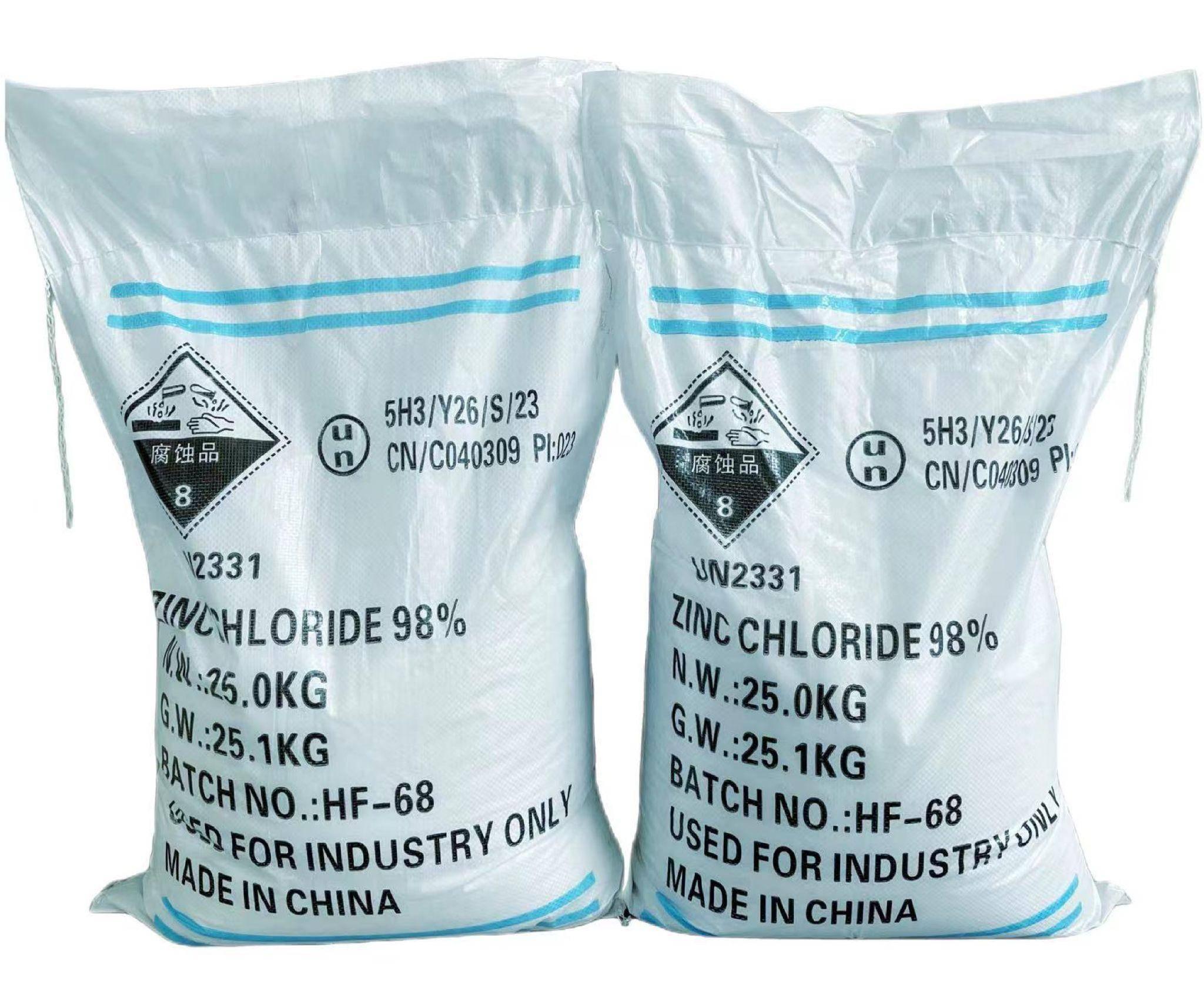
Packaging and labeling should be confirmed at the sample stage, not after the bulk shipment ships.
Documents to Request Alongside the Sample
- ISO 9001 certification
- SGS inspection report (if available)
- REACH compliance documentation (for EU-bound shipments)
- Material Safety Data Sheet (MSDS)
Step 5: Compare Sample Results Against Your Bulk Order Contract
Once testing is complete, put the results in writing — either as an addendum to your purchase order or a signed quality agreement — stating that the bulk shipment must match the tested sample’s grade, purity, and documentation. This single step is what gives you real recourse if a bulk shipment doesn’t match.
What Separates a Reliable Supplier From a Risky One at This Stage
The sample stage reveals more about a supplier than any sales call does. Watch for these signals while you test:
| What to Watch | Reliable Supplier | Red Flag |
|---|---|---|
| Response time on lab questions | Answers technical questions within 24–48 hours | Vague or delayed answers |
| CoA for the sample batch | Provided without being asked twice | Refuses or “can’t locate” the CoA |
| Factory visit or video call | Open to it, offers dates | Avoids the topic or gives excuses |
| Grade consistency explanation | Explains 95% vs. 98% clearly | Can’t explain the difference between grades |
A supplier that manufactures the product themselves — rather than reselling from an unnamed factory — will generally answer these questions faster and with more specific detail. That’s why factory-visit access matters even before you get to the bulk-order stage; our sister company Camasteel applies the same in-person verification standard to steel sourcing, and it’s a useful benchmark for what “verified” should mean with any Chinese supplier.

How quickly and thoroughly a supplier supports your testing process is itself a data point.
WhatsApp Us for Free a Consultation
How to Use This Checklist Before You Place a Bulk Order
Run all five steps before you sign off on a bulk purchase order — not just the ones that are convenient. A supplier who passes Steps 1 and 2 but pushes back on Step 4 (documentation) or Step 5 (written quality agreement) is telling you something important.
Decision-Maker Insight: The real cost of a failed bulk shipment isn’t the product — it’s the production downtime, the re-sourcing scramble, and the time lost re-vetting a new supplier from scratch. A thorough sample process costs a few weeks upfront. Skipping it can cost months. Suppliers who readily provide certifications and third-party verification at the sample stage are almost always the ones who deliver consistent bulk quality later.
Technical Note: When comparing sample results, confirm which grade you actually need. 95% industrial grade is standard for galvanizing, water treatment, and textile use; 98% battery grade is required for battery manufacturing and most chemical synthesis applications. A sample that “passes” but is the wrong grade for your process isn’t a pass — check the CoA’s stated percentage against your application requirement, not just against a general purity threshold.
Zinc Chloride in Industrial Applications:
See It in Action! Want to see how zinc chloride is used in a real industrial setting? Check out this short video. It demonstrates its crucial role in the metal treatment process.
WhatsApp Us for Free a Consultation
Frequently Asked Questions
How much zinc chloride sample should I request before a bulk order?
500g is usually enough for a standard purity and appearance check. Request 1kg if you need to run multiple application-specific trials, such as a galvanizing flux test or a water treatment jar test.
What documents should come with a zinc chloride sample?
At minimum, a Certificate of Analysis tied to the sample’s specific production batch, plus the supplier’s ISO 9001 certification and an MSDS. REACH documentation matters if the material is headed to the EU.
How long should sample testing take before I place a bulk order?
Most buyers complete lab and application testing within one to two weeks, depending on how many trials your process requires. Rushing this step to save time is the most common mistake first-time importers make.
Does a good sample guarantee the bulk shipment will match?
Not automatically — that’s why Step 5 matters. Putting the sample’s tested specifications into your purchase order as a written requirement is what gives you recourse if the bulk shipment doesn’t match what you tested.
Conclusion
Testing a zinc chloride sample properly takes a little more time upfront, but it’s the cheapest insurance policy available before a bulk order leaves China. Run all five steps, document the results, and use them as the baseline your bulk shipment has to meet. Suppliers who make this process easy — fast answers, real documentation, openness to verification — are telling you exactly what kind of partner they’ll be once the order is bigger than a sample.
Industrial Buyers: Next Steps for Sourcing Bulk Zinc Chloride
What makes our Zinc Chloride better:
- ✅ Compliant with EU, UN, ISO Standards – No Legal Headaches
- ✅ Guaranteed Purity – Stability for your Processing Plant
- ✅ Batch-Specific COA Provided – Full Transparency per Shipment
Download our EU-approved FREE COA & Specifications: Specifications Page