



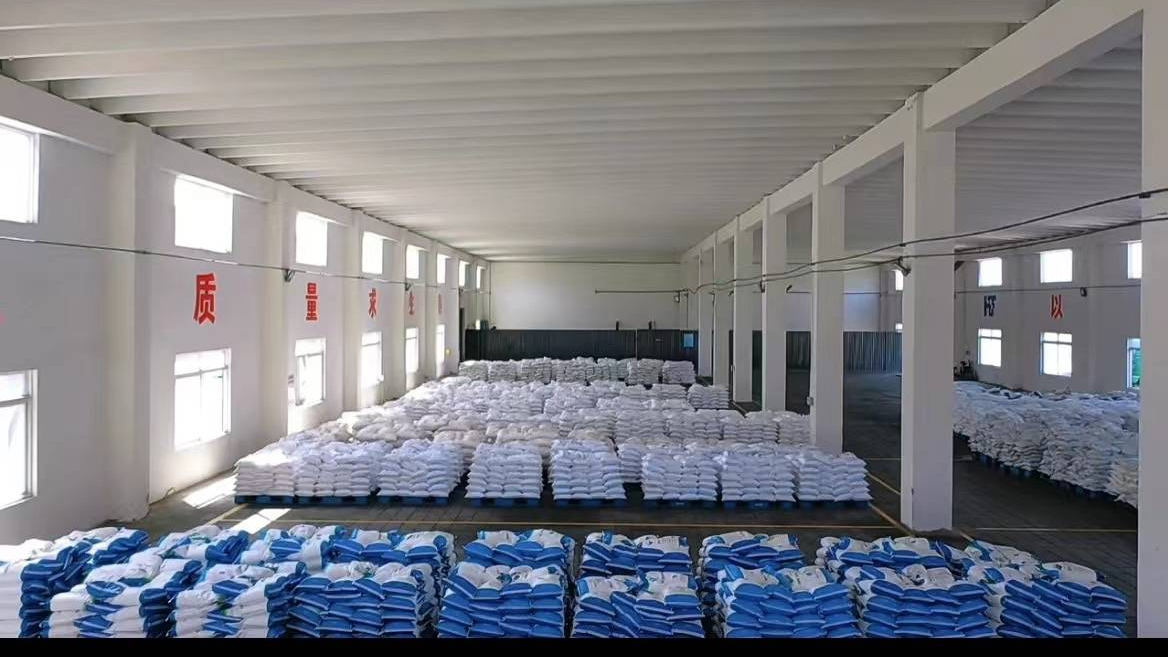
If you’re planning a zinc chloride bulk storage setup for the first time, the packaging and paperwork often matter as much as the warehouse itself. Zinc chloride is highly hygroscopic — it pulls moisture from the air aggressively — and it’s classified as UN 2331, Class 8 (corrosive). Get storage wrong, and you’re looking at caked product, damaged bags, or a warehouse compliance issue. Get it right, and a single well-packed shipment can sit safely for months without quality loss.
This guide walks through exactly what a bulk buyer needs to plan for: packaging standards, warehouse conditions, grade-specific handling, and how to work with a Chinese supplier who actually understands export-ready storage — not just production.
Why Zinc Chloride Bulk Storage Requires Careful Planning
Zinc chloride behaves differently in storage than most industrial salts, and that catches first-time importers off guard more often than any other part of the sourcing process.
Zinc Chloride’s Hygroscopic Nature
Anhydrous zinc chloride absorbs atmospheric moisture almost immediately once a bag or drum is opened. Left exposed, it can deliquesce — literally dissolve into its own absorbed water — which ruins the product and makes it unusable for precise industrial dosing. This is the single biggest reason storage planning can’t be an afterthought. Our breakdown of the different physical forms zinc chloride ships in covers how anhydrous, powder, and solution forms each carry slightly different storage sensitivities.
Storage Risks If Handled Incorrectly
Poor bulk storage typically shows up as one of three problems:
- Caking and clumping, which makes dosing and handling inconsistent
- Bag or drum degradation, from humidity or improper stacking pressure
- Corrosion of nearby metal surfaces, since zinc chloride is corrosive to unprotected steel and some other metals
None of these are dramatic failures — they’re slow, quiet quality losses that show up weeks after the product arrives, which is exactly why storage conditions need to be right from the moment the container is unloaded.
Packaging Standards for Bulk Zinc Chloride Storage
Correct packaging is the first line of defense before a single pallet even reaches your warehouse floor. Full parameter and packaging detail for both grades is laid out on our specifications page.
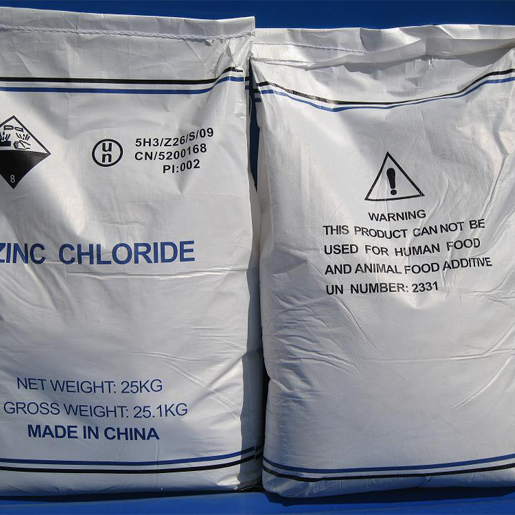
Packaging specifications matter as much as the product spec itself when planning bulk storage.
UN 2331 Class 8 Compliant Packaging
Any zinc chloride shipment crossing an international border should arrive in UN 2331, Class 8-rated packaging. This isn’t optional paperwork — it’s what keeps the product sealed against moisture during transit and what your customs broker will expect to see documented. A legitimate supplier will provide this as standard, not as a premium add-on.

Correctly labeled, UN-compliant bags are the baseline for any bulk import.
Bag Sizes for Different Storage Needs
Packaging format should match your storage capacity and how fast you’ll draw down inventory:
| Packaging Format | Typical Use Case | Storage Notes |
|---|---|---|
| 25kg moisture-resistant bags | Smaller operations, frequent handling | Easier to move manually; more seal points to inspect |
| 50kg moisture-resistant bags | Mid-size operations | Balance of handling ease and storage density |
| 1,000kg jumbo bags | High-volume bulk storage | Fewer seal points, more efficient warehouse space use, needs forklift/hoist handling |
For most bulk industrial buyers moving 25–100+ tons per month, jumbo bags reduce the number of individual seals exposed to warehouse air — one more small factor that adds up over a full storage cycle.
Warehouse Conditions for Zinc Chloride Storage
Even correctly packaged zinc chloride needs the right environment once it’s inside your facility.
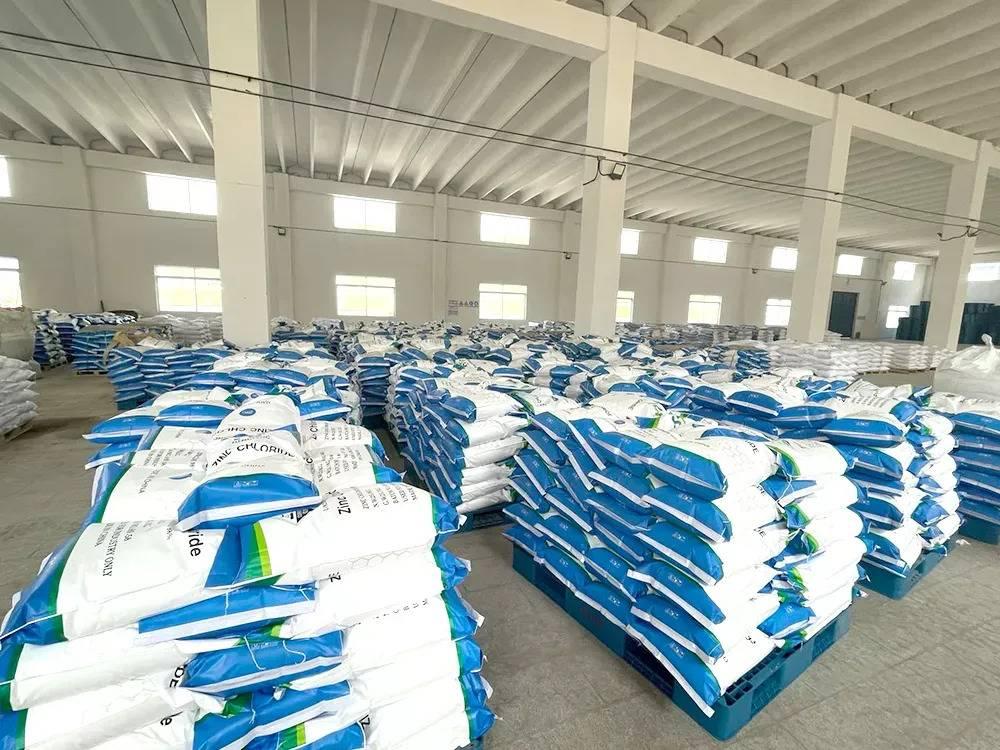 Palletized storage off the bare floor is one of the simplest ways to protect bulk stock.
Temperature and Humidity Control
A dry, covered warehouse is non-negotiable. Zinc chloride storage areas should stay low-humidity and away from direct exposure to rain, condensation, or washdown areas. Temperature swings that create condensation inside a storage bay are just as damaging as outdoor humidity — climate-controlled storage isn’t always necessary, but consistent dryness is.
Material Compatibility
Because zinc chloride is corrosive, avoid direct contact with bare steel shelving, unlined metal drums, or uncoated flooring where spills could sit. Pallets, liners, and racking should be chosen with this in mind, especially in facilities that also store other chemicals.
Ventilation and Segregation from Incompatible Chemicals
Zinc chloride should be stored away from strong alkalis and reactive metals, in a ventilated area separate from incompatible materials. This is standard chemical warehouse practice, but it’s worth confirming explicitly with your safety officer if zinc chloride is a new addition to your site — not every existing storage bay is automatically suitable.
Grade-Specific Storage Considerations (95% vs. 98%)
Storage principles are largely the same across grades, but a few details shift depending on which grade you’re holding.
Industrial Grade (95%) Storage Notes
The 95% industrial grade, common in galvanizing, water treatment, and general industrial use, tolerates standard warehouse conditions as long as moisture exposure is controlled. This is the grade most first-time importers in metal processing, oil and gas, and textile applications will be storing.
Battery Grade (98%) Storage Notes
Battery-grade material demands tighter control, since even small impurity pickup from moisture or contamination can affect performance in downstream battery-grade applications. If you’re storing 98% grade, dedicate a clean, low-traffic storage zone and avoid stacking it near lower-purity industrial stock to reduce cross-contamination risk.
Decision-Maker Insight: Storage isn’t just an operations detail — it’s a cost-protection decision. A poorly stored 25-ton shipment that cakes or absorbs moisture can mean rejected batches, re-processing costs, or a wasted sample-to-bulk trial with a new supplier. Before you commit to a bulk order, ask your supplier directly what packaging format and moisture-resistance spec they’ll provide — that one conversation protects the value of everything you’re importing.
How Chinese Suppliers Prepare Bulk Zinc Chloride for Export-Ready Storage
Storage-readiness starts well before your shipment leaves China — it starts at the factory.

Export-ready packaging starts at the factory yard, long before the shipment reaches port.
Manufacturing Regions and Export Ports
Zinc chloride and related industrial chemical production clusters in a handful of Chinese provinces with established chemical manufacturing infrastructure — our deep dive into the top manufacturing provinces covers where this production actually concentrates and why it matters for lead times. These regions typically feed export through major eastern and northern coastal ports with established bulk and containerized chemical-cargo handling. A supplier close to these logistics corridors generally means shorter inland transit time before loading — less time for packaging to be jostled or exposed before it even reaches the ship. If you’re still comparing sourcing options, our guide to vetting zinc chloride suppliers in China walks through what separates a real manufacturer from a reseller.
Documentation to Request Before Shipment
Before you commit to a bulk purchase, ask for documentation that confirms the product was packaged and stored correctly on the supplier’s end too:
- Certificate of Analysis (CoA) — confirms grade and purity per batch
- Material Safety Data Sheet (MSDS/SDS) — handling and storage guidance
- ISO 9001 — confirms a controlled manufacturing and QC process
- SGS inspection reports — third-party verification, where available
- REACH compliance — relevant for buyers importing into the EU
A supplier who provides these without friction is signaling that their own storage and handling discipline is solid — our guide to zinc chloride supplier certifications breaks down what each document should actually contain. If they’re loose with documentation, that’s often a preview of how loosely they handle packaging on the factory floor.
Technical Note: Ask specifically whether bags are heat-sealed or stitched, and whether an inner moisture-barrier liner is used in addition to the outer bag. Heat-sealed, double-layer packaging with a moisture barrier gives meaningfully better protection during long ocean transit than a single stitched bag — a small spec difference that matters a lot over a 20–40 day shipping window.
Ready to Buy Zinc Chloride From a Verified Source?
Contact our team today for a quotation, sample, and delivery timeline.
WhatsApp Us for Free a Consultation
Common Zinc Chloride Bulk Storage Mistakes First-Time Importers Make
Most storage problems trace back to a handful of avoidable decisions made early in the sourcing process — several of these overlap with the broader pitfalls covered in our first-time buyer mistakes guide:

Careful handling during unloading and stacking is where a lot of preventable damage happens.
- Storing bags directly on a bare concrete floor instead of on pallets, which pulls up ground moisture over time
- Assuming all packaging is moisture-resistant without asking the supplier to confirm the exact bag specification
- Mixing grades in the same storage zone without clear labeling, risking accidental cross-use
- Underestimating stacking height limits, which stresses lower bags and increases the chance of seal failure
- Skipping a small sample order before committing to full bulk volume, so storage behavior is never tested at small scale first
The last point matters more than it sounds — a 500g–1kg sample won’t tell you everything about bulk storage behavior, but combined with a first, smaller trial order, it lets you confirm packaging quality before you’re managing 25+ tons of inventory. Our most-asked questions from first-time buyers covers this trial-order approach in more detail.
Verifying Supplier Legitimacy Before Committing to Bulk Storage Volumes
Packaging quality is ultimately a reflection of the factory behind it, which is why supplier verification matters as much as the storage plan itself.

A well-run factory warehouse is usually a good early signal of how a supplier handles the rest of the process.
Why Factory Visits Matter
An invitation to visit the factory — or arrange a third-party inspection if travel isn’t practical — is one of the clearest signals you’re dealing with a real manufacturer rather than a trading middleman reselling unknown-origin product. It’s the direct answer to the question every first-time importer is quietly asking: does this factory actually exist, and do they actually control their own packaging process? Our manufacturer directory by country is a useful starting point for comparing verified producers.
This is a standard we hold across the broader Camachem network — our sister company Camasteel applies the same factory-visit and inspection standard to steel sourcing, because verification matters just as much when the product is metal as when it’s a moisture-sensitive chemical.
Conclusion
Zinc chloride bulk storage isn’t complicated, but it is unforgiving of shortcuts. Moisture-resistant, UN-compliant packaging, a dry and well-ventilated warehouse, and grade-appropriate handling cover most of what determines whether a shipment holds its quality for the long haul. The rest comes down to who you’re sourcing from — a supplier who packages correctly and documents it properly is usually the same supplier whose factory you’d be comfortable visiting in person.
WhatsApp Us for Free a Consultation
Ready to See Zinc Chloride in a Real Industrial Setting?
Want to see how zinc chloride is used in a real industrial setting? Check out this short video — it demonstrates its crucial role in the metal treatment process.
FAQ: Zinc Chloride Bulk Storage
How long can zinc chloride be safely stored in bulk?
Properly packaged zinc chloride, kept dry and sealed, can typically be stored for an extended period without quality loss. The limiting factor is almost always moisture exposure, not age — a bag stored in a dry, sealed condition for many months will usually outperform one exposed to humidity for just a few weeks.
Can zinc chloride be stored outdoors if it’s covered?
It’s not recommended. Even under a roof, outdoor storage areas typically have more humidity fluctuation and condensation risk than an enclosed warehouse. Bulk zinc chloride should be kept in a fully enclosed, dry storage space.
What’s the difference between storing 25kg bags and 1,000kg jumbo bags?
Jumbo bags reduce the number of individual seal points exposed to air and make better use of warehouse floor space for high-volume buyers, but they require forklift or hoist handling. Smaller 25kg or 50kg bags are easier to move manually but mean more bags — and more seals — to manage and inspect.
Do I need special warehouse certification to store zinc chloride?
Requirements vary by country and local regulation, so this is worth confirming with your own compliance officer. In general, a dry, ventilated, corrosive-materials-appropriate storage area segregated from incompatible chemicals is the baseline most facilities need to meet.
Industrial Buyers: Next Steps for Sourcing Bulk Zinc Chloride
What makes our Zinc Chloride Better:
✅ Compliant with EU, UN, ISO Standards – No Legal Headaches
✅ Guaranteed Purity – Stability for your Processing Plant
✅ Batch-Specific COA Provided – Full Transparency per Shipment.
Download Our EU-approved FREE COA & Specifications.[Specifications Page]
Zinc Chloride Bulk Storage Readiness Quiz
Answer five quick questions to check whether your zinc chloride storage setup is prepared for your next shipment.
1. How will you store zinc chloride?
2. Is your storage area protected from moisture?
3. How will the material be handled?
4. How much zinc chloride will you store?
5. Do you have storage and handling procedures?
Your storage report is ready
Enter your business email to receive your Zinc Chloride Bulk Storage Report and free checklist.
Your Storage Readiness Result
Your Storage Checklist
- Keep zinc chloride sealed and protected from moisture.
- Use a dry and suitable storage area.
- Check packaging before receiving and storing the material.
- Make sure handling equipment is suitable for the shipment.
- Follow applicable SDS and site safety procedures.
- Review storage capacity before receiving the shipment.
Packaging Options
- 25 kg bags
- 1,000 kg bulk bags
Important Storage Point
Use this report as a quick reference before receiving your next bulk zinc chloride shipment.