



If you’re importing zinc chloride from China for the first time, the biggest risk isn’t price. It’s paperwork. A missing certificate can hold your container at customs for weeks. An incomplete safety data sheet can trigger a compliance rejection. And a supplier who can’t produce real documentation is usually telling you something important about their business — even if they never say it out loud.
This guide walks through the eight documents most first-time buyers should request before placing an order, why each one matters, and how to tell a legitimate factory from a trading company hiding behind a nice website.

Properly labeled, UN-compliant packaging is one of the first signs a supplier takes documentation seriously.
Why Documentation Is the Real Risk in Zinc Chloride Imports
The Hidden Cost of Missing Paperwork
A shipment without the right paperwork doesn’t just get delayed — it can get seized, fined, or refused entirely at the destination port. Zinc chloride is classified as a hazardous material (UN 2331, Class 8, corrosive), so customs authorities generally check it more closely than non-hazardous chemicals. Every day a container sits at port waiting on a document that should have been requested upfront is a day of demurrage fees eating into your margin.
What “Safely Importing” Actually Means
Safety here covers two things: the physical handling and transport of a corrosive chemical, and the paper trail that proves what’s actually in the drum or bag. Buyers who focus only on price and skip the second part are the ones who end up with a shipment they can’t verify — and no way to prove it to their own customers or regulators.
The 8 Essential Documents You Need When Importing Zinc Chloride From China
1. Certificate of Analysis (CoA)
The CoA is the batch-specific lab report confirming purity, moisture content, and impurity levels for the exact lot you’re buying — not a generic spec sheet copied across every order. For zinc chloride, this is what separates the 95% industrial grade from the 98% battery grade, and a reputable supplier issues a CoA per shipment, not per product line.
2. Safety Data Sheet (SDS / MSDS)
The SDS covers handling precautions, storage requirements, first-aid measures, and transport classification. Your logistics provider, customs broker, and warehouse staff typically all need this document, and many destination countries require it as a condition of clearing a hazardous chemical shipment.
3. Dangerous Goods Declaration
Because zinc chloride ships under UN 2331, Class 8, most international shipments require a signed dangerous goods declaration matching the packaging, labeling, and transport mode — though the exact format and requirement can vary by destination country and mode of transport, so confirm the specifics with your freight forwarder. Mismatches between this declaration and the physical packaging are a common reason hazmat shipments get flagged for inspection.
4. Commercial Invoice and Packing List
These two documents establish the declared value, quantity, and packaging breakdown customs used to assess duties and verify the shipment matches what was ordered. Discrepancies here, even small ones, are a common trigger for a customs hold.
5. Bill of Lading (B/L)
The bill of lading is your proof of shipment and the document that lets you (or your bank, if you’re using a letter of credit) take legal possession of the cargo. Always confirm whether you’re receiving an original B/L or a telex release, since this affects how quickly you can collect your goods on arrival.
6. Certificate of Origin (CoO)
The CoO confirms the shipment genuinely originates from China, which matters for tariff classification and, in some trade lanes, preferential duty rates. It’s also a basic legitimacy check — a supplier that can’t produce one easily is worth a second look.
7. Import License / Chemical Registration
This one lives on your side of the transaction. Many countries require an import permit or hazardous chemical registration before a corrosive substance like zinc chloride can clear customs — check with your national chemical regulator early, since requirements vary by jurisdiction and this step can take longer than the shipping itself.
8. Quality & Compliance Certifications
ISO 9001, SGS third-party inspection reports, REACH compliance (for EU-bound shipments), and RoHS documentation where applicable all signal a supplier operating to an actual quality management system, not just producing to order. See our full specifications for what a compliant shipment should include.

Real certifications are traceable — ask your supplier to show the certificate, not just mention the standard.
How These Documents Protect You as a First-Time Importer
Verifying Supplier Legitimacy Before You Pay
Any supplier can put “ISO 9001” or “SGS tested” on a product listing. Far fewer can produce the actual certificate, a batch-specific CoA, and a dangerous goods declaration that matches the shipment on request. Asking for all eight documents before you commit to an order is one of the fastest ways to separate a real factory from a trading company reselling under its own label — a distinction our buyer mistakes guide covers in more detail.
A South Africa-based metal processing buyer went through exactly this kind of verification before their first order — checking certifications and requesting a batch CoA rather than relying on the listing alone — and that same trust-building process is outlined on our success stories page.
WhatsApp Us for Free a Consultation
Grade Confusion: Why the CoA Matters for 95% vs 98%
Technical Note: Industrial-grade zinc chloride (95%) and battery-grade zinc chloride (98%) look identical on paper if you’re only reading a product description. The CoA is what confirms which one you’re actually receiving, along with moisture content and heavy-metal impurity levels — details that matter for water treatment and metal processing buyers, and matter even more for battery and chemical synthesis buyers, where a purity gap can affect an entire production run.
See our grade comparison for what each grade should test at.
China’s Export & Compliance Landscape
Where Zinc Chloride Manufacturing Clusters in China
Zinc chloride production in China concentrates around a handful of chemical-manufacturing provinces with established zinc processing and export infrastructure — clusters that also tend to have more experience preparing the compliance paperwork international buyers need, since they’ve been exporting hazardous chemicals for years, not months.
Ports and Shipping Routes Buyers Should Know
Bulk and containerized zinc chloride shipments typically move through major eastern Chinese ports with established hazmat handling capacity. Ask your supplier which port they ship from and how experienced that port’s customs team is with Class 8 corrosive declarations — an inexperienced port handler is often where paperwork errors creep in, not the factory itself.

Ports with established hazmat handling experience tend to have fewer documentation errors slip through.
Manufacturer vs. Trading Company: Why It Matters for Your Paperwork
A manufacturer issues documents directly from its own quality control lab and export department. A trading company is often relaying documents from a factory it doesn’t control — and sometimes can’t verify. This is also why factory visits matter: our sister company Camasteel, which sources steel from China, applies the same standard of in-person factory verification before recommending a supplier, and it’s a habit worth adopting for any China import, chemicals included.
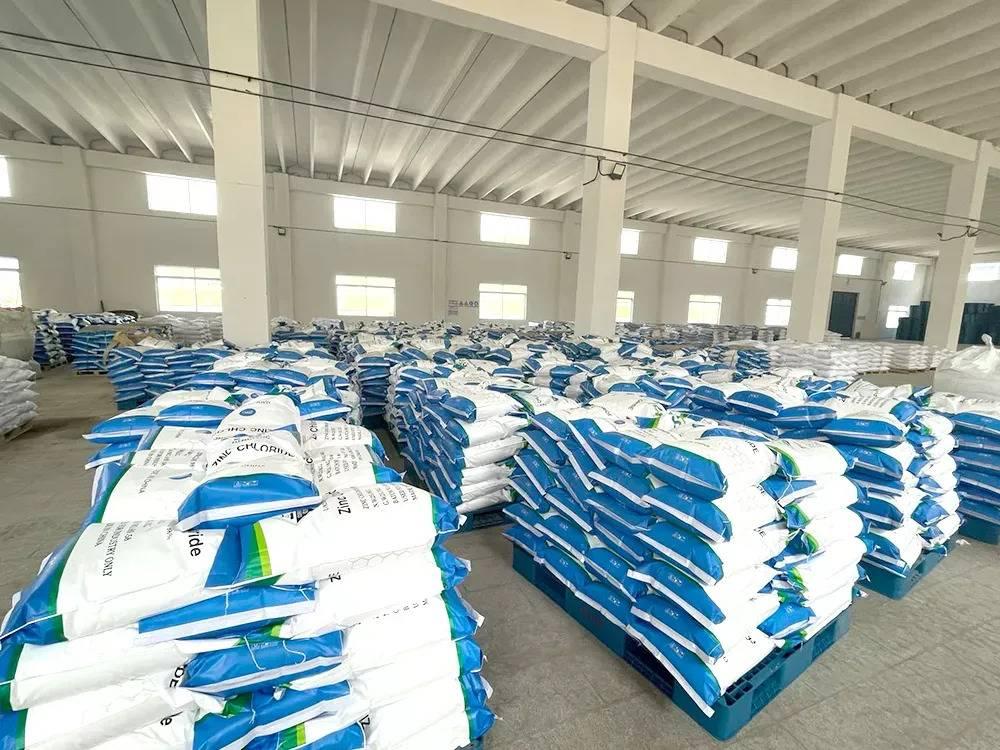
A real manufacturer’s warehouse, not a rebranded trading floor, is what your documentation should trace back to.
Decision-Maker Insight: The cost difference between a verified manufacturer and an unverified trading company rarely shows up in the unit price — it shows up in delayed shipments, failed customs clearance, or a batch that doesn’t match its paperwork. For a business bringing in 25+ tons per shipment, one documentation failure can cost more than the savings from a slightly cheaper quote ever would.
A Simple Document Checklist Before You Place an Order
| Document | Purpose | Who Issues It |
|---|---|---|
| Certificate of Analysis (CoA) | Confirms purity and grade for this specific batch | Supplier’s QC lab |
| Safety Data Sheet (SDS) | Handling, storage, and first-aid information | Supplier |
| Dangerous Goods Declaration | Documents UN 2331 / Class 8 status for transport | Supplier / freight forwarder |
| Commercial Invoice & Packing List | Declared value and shipment contents | Supplier |
| Bill of Lading | Proof of shipment and title to the goods | Shipping line / freight forwarder |
| Certificate of Origin | Confirms China as country of manufacture | Chamber of commerce / supplier |
| Import License or Chemical Registration | Legal clearance to import a hazardous chemical | Your country’s regulator |
| Quality Certifications (ISO, SGS, REACH) | Proof of quality management and compliance | Certifying body, verified by supplier |
Common Mistakes First-Time Importers Make With Documentation
Skipping the CoA Because “The Price Looked Good”
A low quote with no batch-specific CoA offered upfront is a warning sign, not a bargain. If a supplier hesitates to commit to providing one before you order, that hesitation is the answer.
Accepting Photocopied or Screenshot Certifications
Certifications should be verifiable — either through the certifying body’s own registry or a document the supplier is willing to have you confirm independently. A screenshot with no way to check it isn’t proof of anything.
Not Confirming the Correct HS Code
Using the wrong harmonized system code on the commercial invoice can misclassify duties or trigger an inspection. Confirm the code with your customs broker before the shipment leaves China, not after it arrives.

Reviewing documentation terms before the order is placed avoids disputes once the shipment is already in transit.
For more, see our buyer mistakes guide, which covers pricing and sample-order pitfalls too.
WhatsApp Us for Free a Consultation
Zinc Chloride in Industrial Applications: See It in Action!
Want to see how zinc chloride is used in a real industrial setting? Check out this short video. It demonstrates its crucial role in the metal treatment process.
Frequently Asked Questions
Do I need a separate import license for zinc chloride, or does the supplier handle that?
The import license or chemical registration is your responsibility, not the supplier’s. Requirements vary by country, so check with your national chemical or trade regulator before finalizing an order.
What happens if my shipment arrives without a matching Certificate of Analysis?
Customs or your own quality team may hold the shipment until purity and grade can be verified another way, which usually means delays and added testing costs. This is why confirming the CoA before shipment, not after arrival, matters.
Is a CoA the same as an SDS?
No. The CoA confirms product purity and grade for a specific batch; the SDS covers safety, handling, and transport information. You need both for a compliant import.
Can a trading company provide the same documentation as a manufacturer?
Sometimes, but it depends on how directly they work with the factory. Ask whether documents come straight from the producing plant’s QC lab or are relayed through an intermediary — see our manufacturer guide for more on this distinction.
How long does full documentation typically take to prepare before shipment?
This varies by supplier, order size, and destination-country requirements, but factories with established export departments generally prepare standard documents (CoA, SDS, packing list, dangerous goods declaration) alongside production, not after it — worth confirming with any China supplier you’re evaluating.
Conclusion
Importing zinc chloride from China safely comes down to one habit: treating documentation as a condition of the order, not an afterthought. A supplier who readily provides a batch-specific CoA, SDS, dangerous goods declaration, and real certifications is telling you they run a compliant operation. One who can’t, or won’t, is telling you something too. Review our specifications and application pages before your next order, and use the checklist above every time you request a quote.
Industrial Buyers: Next Steps for Sourcing Bulk Zinc Chloride
What makes our Zinc Chloride Better:
✅ Compliant with EU, UN, ISO Standards – No Legal Headaches
✅ Guaranteed Purity – Stability for your Processing Plant
✅ Batch-Specific COA Provided – Full Transparency per Shipment.
Download Our EU-approved FREE COA & Specifications. Specifications Page