



If you buy industrial chemicals in bulk, you’ve probably had this exact question land on your desk: should this line item be zinc chloride or iron chloride? Both are common salts used across water treatment, metal processing, and chemical manufacturing, and on paper they can look interchangeable. In practice, they solve different problems — and picking the wrong one costs you dosing time, equipment wear, or a failed batch.
This guide breaks down zinc chloride vs iron chloride the way a sourcing manager needs it: what each one actually does, where they overlap, and how to decide which one belongs in your process before you place a bulk order.
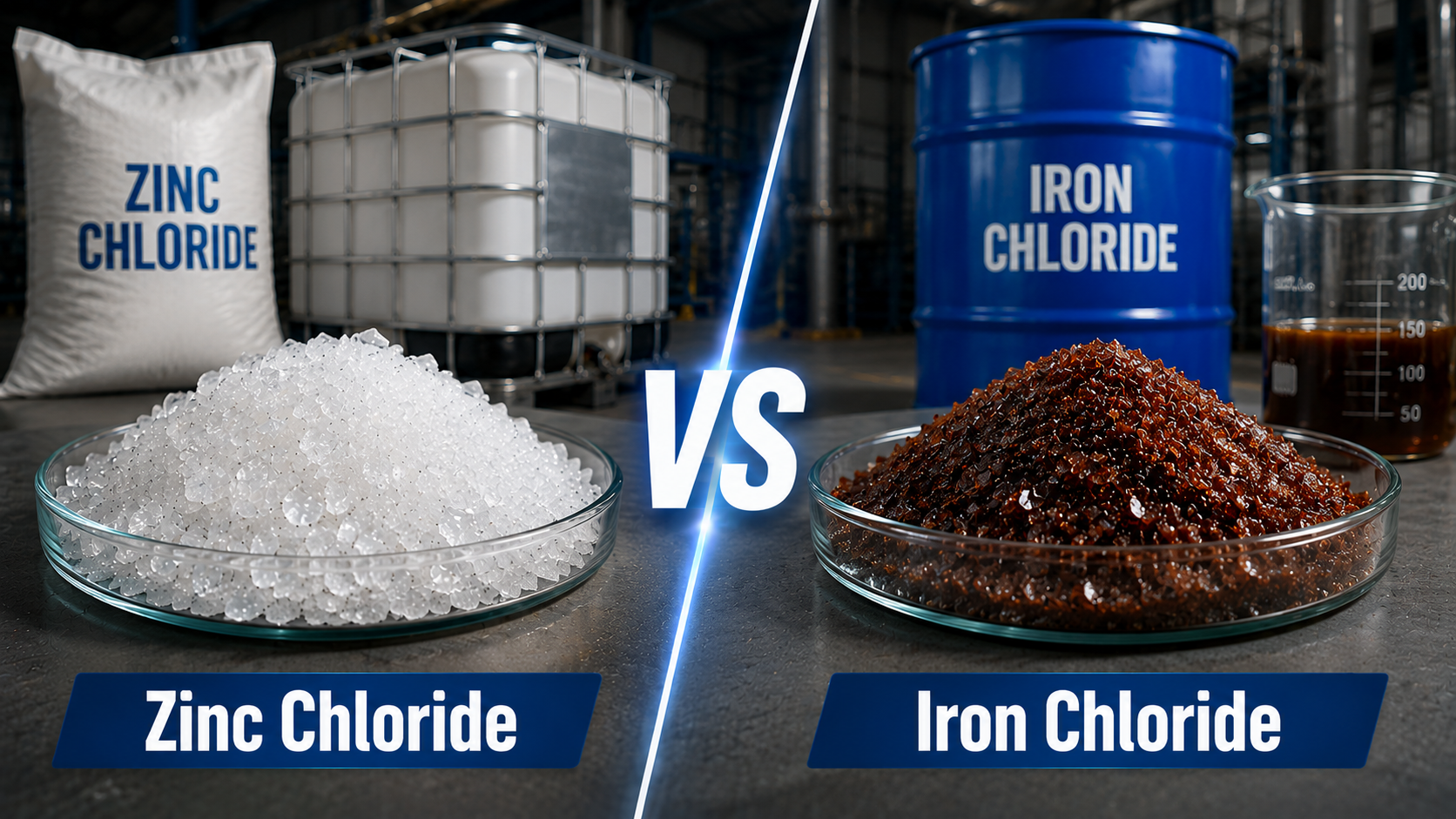
Zinc chloride vs Iron chloride: a visual comparison of two industrial chloride chemicals.
Quick Comparison: Zinc Chloride vs Iron Chloride
| Factor | Zinc Chloride (ZnCl₂) | Iron Chloride (FeCl₃ / FeCl₂) |
|---|---|---|
| Primary industrial role | Metal flux, battery electrolyte, textile processing, catalyst | Water/wastewater coagulant, metal etchant, sludge dewatering |
| Common grades | 95% industrial, 98% battery grade | Liquid (typically 38–42% FeCl₃) or anhydrous solid |
| Appearance | White to colorless crystalline solid or solution | Dark brown to orange liquid, or brownish-black solid |
| Corrosivity | Corrosive to metals in solution; deliquescent | Highly corrosive, especially to aluminium and unprotected steel |
| Typical packaging | 25 kg/50 kg moisture-resistant bags, 1,000 kg jumbo bags | Bulk liquid tote/drum, or bagged solid |
| Water treatment use | Niche (mineral supplementation, specific process water) | Dominant coagulant for turbidity and phosphate removal |
| Metal industry use | Galvanizing flux, soldering flux | PCB etching, metal surface treatment |
| Regulatory class | UN 2331, Class 8 corrosive | UN 2582 (ferric chloride solution), Class 8 corrosive |
What Zinc Chloride Actually Does
A Flux Chemical First, a Coagulant Rarely
Zinc chloride’s core industrial job is surface preparation. In hot-dip galvanizing, a flux bath — often a zinc chloride and ammonium chloride blend — strips residual oxide from steel just before it’s dipped in molten zinc, so the coating bonds properly. Without a reliable flux, you get flaking, bare spots, and rework. This is the largest single use case behind our own galvanizing flux guide.
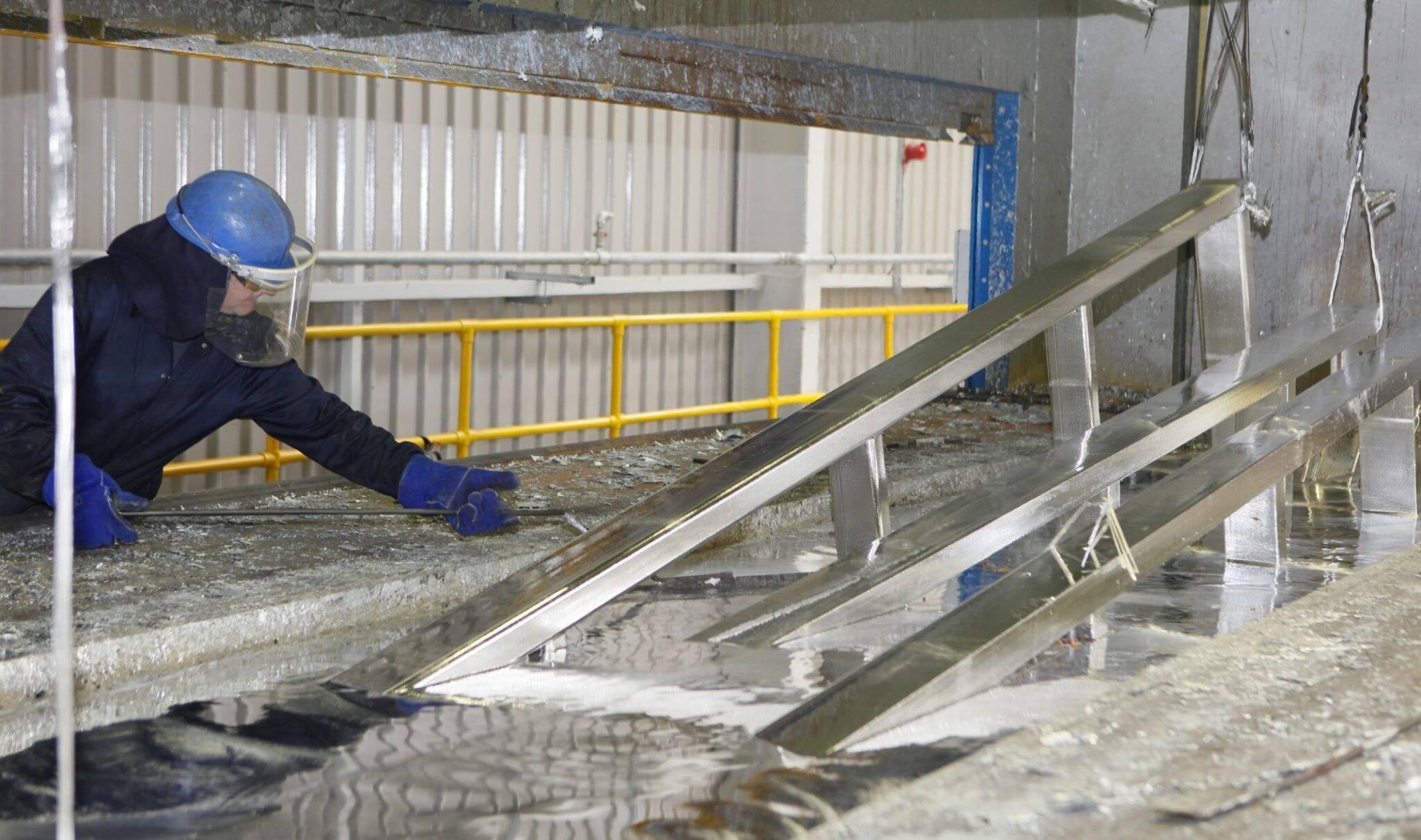
Flux quality directly affects how well zinc coating adheres to steel.
Beyond Galvanizing
- Battery electrolytes — zinc chloride is the electrolyte base in zinc-carbon “heavy-duty” batteries, chosen for stable discharge performance.
- Textile and fiber processing — used in mercerizing and dyeing baths and in some viscose rayon manufacturing steps.
- Oil and gas — high-density brine for drilling and completion fluids.
- Chemical synthesis — a Lewis acid catalyst in organic reactions (Fischer indole synthesis, resin production) and the active ingredient in Lucas’ reagent for lab-scale alcohol testing.
- Wood preservation and disinfection — a legacy use, still relevant in some regional markets.
Choosing Between 95% and 98% Grade
Technical Note: The 95% industrial grade covers galvanizing flux, textile, oil and gas, rubber, and paper applications where a small margin of impurities doesn’t affect the outcome. The 98% battery grade is required wherever purity affects performance directly — battery electrolytes and chemical synthesis, where trace metal contamination can throw off a reaction or shorten cell life. Always confirm which grade your process spec calls for before ordering; the two aren’t interchangeable on a cost basis alone.
What Iron Chloride Actually Does
“Iron chloride” in a commercial context almost always means ferric chloride (FeCl₃), sometimes ferrous chloride (FeCl₂) in reducing applications. Its dominant global use is water and wastewater treatment.
The Standard Coagulant
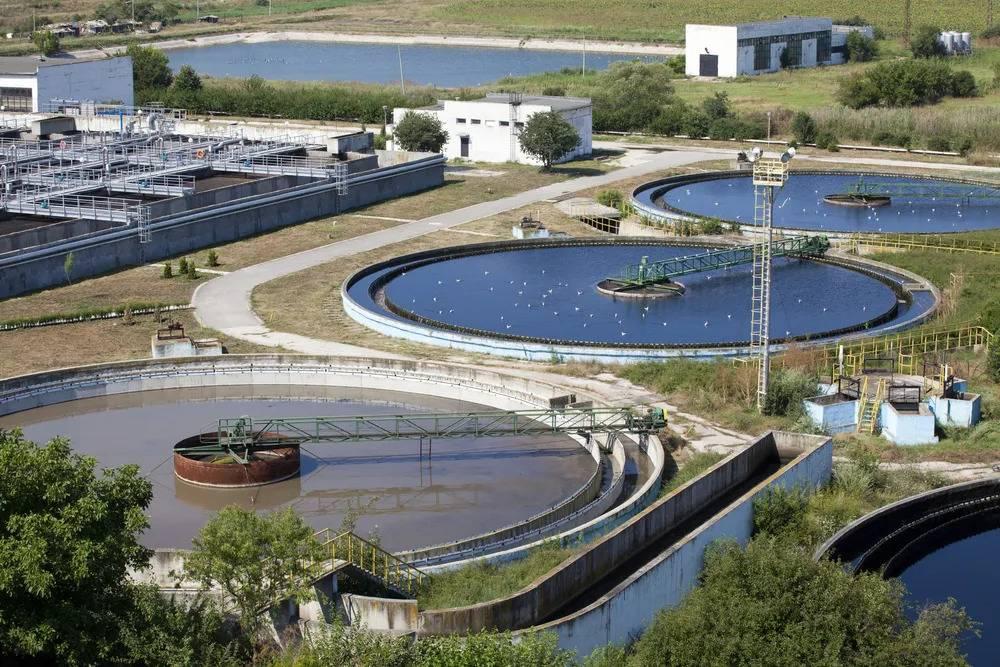
Ferric chloride is the coagulant most water treatment plants are already built around.
Ferric chloride destabilizes suspended particles in raw or wastewater so they clump into floc and settle out. It’s also widely used for sludge dewatering and phosphate removal in municipal plants. This is a mature, well-documented use — the EPA’s ferric chloride supply chain profile lists water treatment coagulation and dewatering as its primary commercial applications, alongside metal etching and surface treatment as secondary uses.
Other Iron Chloride Applications
- PCB and metal etching — ferric chloride is the standard etchant for copper on printed circuit boards.
- Metal surface treatment — pickling and surface conditioning before further processing.
- Catalysis — used in some Friedel-Crafts and organic chlorination reactions.
Where They Overlap — and Where Buyers Get Confused
A few processes technically accept either chemical, which is where sourcing teams sometimes waste time comparing quotes for the wrong product:
- Metal surface prep: zinc chloride flux prepares steel for galvanizing; ferric chloride etches or pickles metal instead of coating it. Different goals, not substitutes.
- Water treatment: ferric chloride is the default bulk coagulant; zinc compounds show up in water treatment more for targeted mineral or process-water applications, not as a primary coagulant. If your RFQ says “coagulant”, you almost certainly want iron chloride, not zinc chloride.
- Chemical synthesis: both can act as catalysts, but in different reaction classes — this is a spec-sheet question, not a general one.
Decision-Maker Insight: If your team is comparing quotes for zinc chloride and iron chloride side by side because a supplier offered a discount on “chloride chemicals”, stop and check the process spec first. The two chemicals are priced and sourced independently, and swapping one for the other to save on freight or MOQ almost always costs more in reprocessing or equipment corrosion than it saves upfront. </blockquote>
Chemical synthesis is one of the few areas where zinc chloride and iron chloride genuinely compete on function.
WhatsApp Us for Free a Consultation
(Tina — Australia, Europe, North America)
WhatsApp Us for Free a Consultation
(Nancy — Africa, Asia, South America)
When to Choose Each
Choose zinc chloride if you need:
- Galvanizing or soldering flux
- A battery-grade electrolyte
- A textile mordant or dyeing-bath additive
- A drilling fluid density agent
- A Lewis acid catalyst for specific organic synthesis routes
Choose iron chloride if you need:
- A primary water or wastewater coagulant
- A sludge dewatering agent
- A PCB or metal etchant
- A catalyst for Friedel-Crafts-type reactions
If your application sits outside these lists, the honest answer is to check your process spec sheet or ask a technical supplier — not to guess based on price per ton.
Bulk Procurement Checklist
Before you request a quote for either chemical, confirm:
- Exact grade required — 95% industrial or 98% battery grade for zinc chloride; solution concentration for ferric chloride.
- Certifications needed — ISO 9001, SGS, REACH, COA, MSDS, and RoHS documentation should be available per batch.

Ask any supplier — zinc chloride or iron chloride — to show certifications like these before you commit to a bulk order.
3. Packaging format — 25 kg/50 kg moisture-resistant bags or 1,000 kg jumbo bags for solids; drums or ISO tanks for liquids.
4. UN classification and hazmat documentation — both chemicals ship under UN 2331 (zinc chloride) or UN 2582 (ferric chloride solution) as Class 8 corrosives, so compliant packaging and paperwork matter for customs clearance.
5. Sample policy — a 500 g–1 kg sample for pre-bulk testing before committing to a full container.
6. Factory verification — for a first-time China import, ask whether the supplier or its parent company offers a factory visit. It’s the fastest way to confirm the operation is real.
Decision-Maker Insight: For first-time importers, the bigger risk usually isn’t picking the wrong chemical — it’s picking an unverifiable supplier for the right one. We’re backed by Camachem, an established chemical procurement company, and every batch we ship includes a batch-specific Certificate of Analysis so you’re not relying on a listing page alone.
Ready to Buy Zinc Chloride From a Verified Source?
Contact our team today for a quotation, sample, and delivery timeline.
WhatsApp Us for Free a Consultation
(Tina — Australia, Europe, North America)
WhatsApp Us for Free a Consultation
(Nancy — Africa, Asia, South America)
Handling and Storage Notes
Both chemicals are corrosive and should be stored and handled accordingly:
- Zinc chloride is deliquescent — it absorbs moisture from the air, so bags and drums need to stay sealed and dry. Full parameter tables for both grades are in our specifications.
- Iron chloride is corrosive to most metals when wet, including aluminum, so storage tanks and dosing equipment are typically lined or made of compatible plastic, not bare steel.
- Both require standard PPE (gloves, eye protection) and ventilation during handling, per their respective safety data sheets.
For a full breakdown of where zinc chloride fits across industry segments—from battery manufacturing to paper and pulp—see our applications overview.
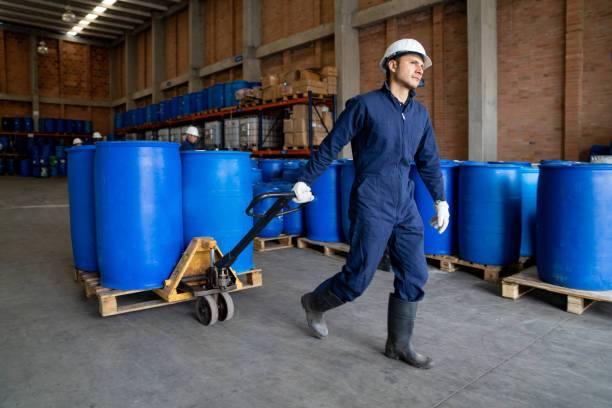
Correct packaging and dry storage prevent moisture pickup during transit and warehousing.
A steel galvanizing customer in South Africa has run our 95% industrial-grade zinc chloride in production flux with no quality issues — one of several real customer outcomes covered in our success stories.
Ready to Buy Zinc Chloride From a Verified Source?
Want to see how zinc chloride is used in a real industrial setting? Check out this short video — it demonstrates its role in the metal treatment process.
Contact our team today for a quotation, sample, and delivery timeline.
WhatsApp Us for Free a Consultation
Frequently Asked Questions
Is iron chloride the same as ferric chloride?
Commercially, yes — when buyers say “iron chloride” in an industrial context, they almost always mean ferric chloride (FeCl₃), the form used in water treatment and etching. Ferrous chloride (FeCl₂) exists but is less commonly traded in bulk.
Can zinc chloride replace iron chloride as a water treatment coagulant?
No. Ferric chloride is the established coagulant for turbidity and phosphate removal at scale. Zinc chloride isn’t formulated or priced for that role, and substituting it would likely underperform and cost more.
Which one is more corrosive to handle?
Both are Class 8 corrosives under UN transport rules. Iron chloride in liquid form is generally more aggressive toward bare metal equipment, which is why dosing systems for it are usually lined or plastic.
Do zinc chloride and iron chloride ship under the same hazmat rules?
Both require UN-compliant packaging and documentation, but under different UN numbers (2331 for zinc chloride, 2582 for ferric chloride solution) — your freight forwarder will need the correct one for customs paperwork.
What certifications should I ask for when sourcing either chemical?
At minimum: ISO 9001, a batch-specific Certificate of Analysis (COA), and a current MSDS/SDS. REACH and RoHS documentation matter if you’re importing into the EU.
Conclusion
Zinc chloride and iron chloride aren’t competing products — they’re tools for different jobs that occasionally show up in the same procurement conversation because they sound similar and ship under similar hazmat rules. Get the grade and application right first, then focus your supplier vetting on certifications, sample policy, and whether the factory behind the listing is verifiable. That’s the part that actually determines whether your bulk order shows up on spec.
Industrial Buyers: Next Steps for Sourcing Bulk Zinc Chloride
What makes our Zinc Chloride Better:
✅ Compliant with EU, UN, ISO Standards – No Legal Headaches
✅ Guaranteed Purity – Stability for your Processing Plant
✅ Batch-Specific COA Provided – Full Transparency per Shipment.
Download Our EU-approved FREE COA & Specifications. Specifications Page