



A zinc chloride specification sheet looks simple at first glance: a few percentages, a melting point, and a packaging note. But for a first-time buyer sourcing from China, that one-page document is the closest thing you have to proof that a supplier is legitimate before the shipment ever leaves port. Misreading it, or accepting one that’s missing key data, is how buyers end up with a product that’s technically “zinc chloride” but wrong for their process.
This guide walks through what should actually be on a zinc chloride specifications sheet, how to tell 95% industrial grade from 98% battery grade on paper, what a genuine Certificate of Analysis (COA) should include, and the red flags that separate a real manufacturer from a trading company reselling someone else’s stock.
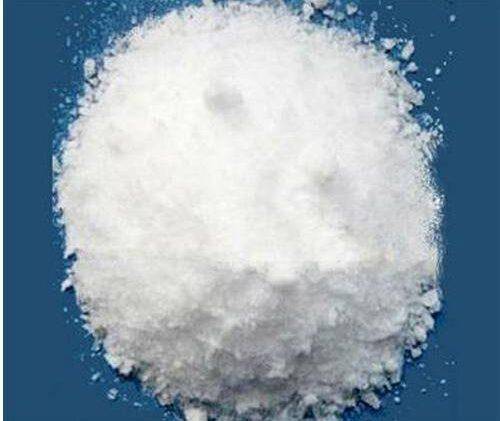
A legitimate spec sheet should match what’s in the bag: clean white crystals, not a discolored or clumped product.
Why the Spec Sheet Matters More Than the Price Quote
Most first-time buyers compare suppliers on price per ton first and documentation second, which is backwards. A quote tells you almost nothing about whether a supplier can actually deliver consistent quality across repeat shipments. A spec sheet — assuming it’s real, batch-specific, and matched by a genuine COA: is the one document that lets you verify, before you wire a deposit, whether the product will perform the way your process needs it to.
This matters more for zinc chloride than for many industrial chemicals because it’s deliquescent: it absorbs moisture from the air and will clump, partially liquefy, or degrade in transit if it isn’t packed and stored correctly. A supplier who understands this will build moisture control into both the spec sheet and the packaging. A supplier who doesn’t will hand you a generic listing-page table that looks fine on screen and tells you nothing about the actual batch heading to your port.
What Actually Belongs on a Zinc Chloride Spec Sheet
At minimum, a usable spec sheet states the ZnCl₂ purity percentage, moisture content, oxychloride level, pH of a standard solution, heavy-metal impurity limits (iron, lead, cadmium), and physical form — anhydrous powder, granular, or pearls. Each of these lines exists for a reason, not as filler:
- Purity percentage determines which grade tier you’re actually receiving and whether it matches what your application requires.
- Moisture content flags whether the product was packed and stored correctly. Because zinc chloride is highly hygroscopic, even a small moisture reading above spec can mean the packaging failed somewhere along the supply chain.
- Oxychloride level is a byproduct indicator — a higher-than-expected reading usually points to an incomplete or rushed production process.
- pH of a standard solution matters for buyers using zinc chloride in solution form, particularly in water treatment and textile processing, where pH drift can affect downstream chemistry.
- Heavy-metal impurity limits are the line battery manufacturers scrutinize most closely, since trace iron, lead, or cadmium can shorten electrolyte life or interfere with cell performance.
The chemical fundamentals are fixed regardless of grade: CAS number 7646-85-7, formula ZnCl₂, a melting point around 290°C anhydrous, and solubility of roughly 432 g per 100 g of water at 25°C. Those numbers shouldn’t vary between suppliers — if a spec sheet lists constants that drift meaningfully from these established values, that’s a documentation error worth questioning before you order, not a rounding difference to shrug off.
Decision-Maker Insight
A supplier who can’t produce a batch-specific spec sheet on request, only a generic product page, is telling you something. Legitimate manufacturers test every batch and can hand you a COA tied to that shipment’s lot number — not a static PDF reused across every order. If the numbers on the sheet never seem to change from batch to batch, ask why. A supplier who welcomes the question and can explain their testing cadence is a very different partner than one who deflects it.
95% Industrial Grade vs. 98% Battery Grade — Reading the Difference
The two grades that matter for most industrial buyers are 95% industrial grade and 98% battery grade, and the gap between them isn’t just a purity number — it’s what’s tolerated in the remaining fraction.
| Parameter | 95% Industrial Grade | 98% Battery Grade |
| Typical use | Galvanizing flux, soldering, general metal treatment | Dry-cell batteries, precision electrolyte applications |
| Heavy-metal tolerance | Standard, wider tolerance band | Tightly controlled (low Fe, Pb, Cd) |
| Moisture sensitivity | Standard handling requirements | Same handling, but purity is more sensitive to contamination |
| Typical buyer priority | Cost-efficiency at scale | Consistency and trace-impurity control |
Industrial-grade material carries a higher tolerance for standard moisture and general impurities, which is fine for applications where the chemistry doesn’t need to be pharmaceutical-clean. Battery-grade material is held to tighter limits on iron, lead, and cadmium because even trace heavy metals can interfere with a dry-cell electrolyte’s performance and shelf life.
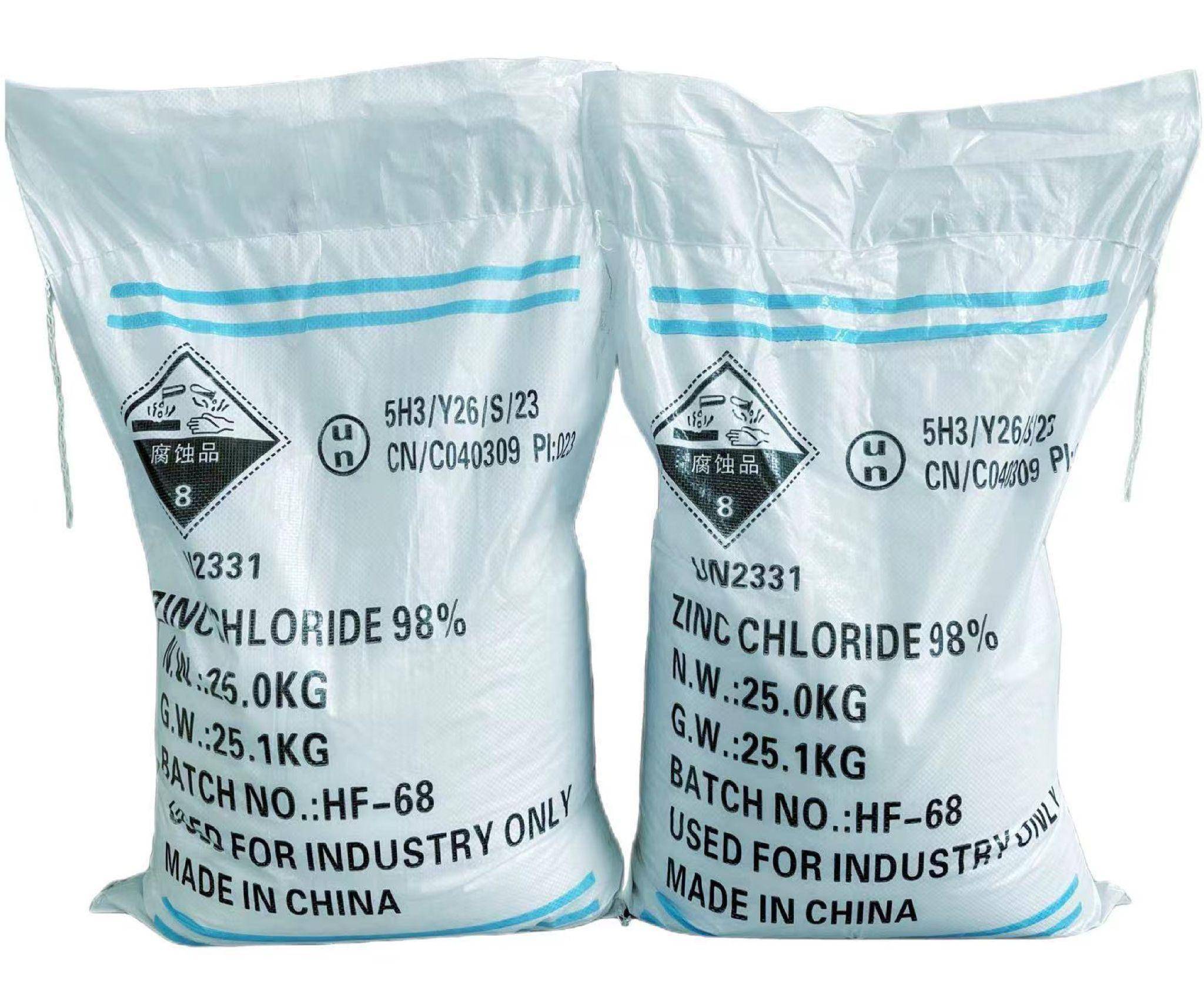
Real customers make this call based on cost and application, not brand preference. In one Poland galvanizing success story, a first-time importer running a steel galvanizing plant settled on 95% Industrial Grade for reliable fluxing and stayed on it as an ongoing partnership. Other buyers start on 98% battery grade before switching to 95% industrial once they confirm their process doesn’t need the tighter tolerance – the same grade-matching decision most first-time buyers face once they actually compare the numbers against their own applications.
Technical Note
Don’t assume “higher purity” automatically means “better”. A battery manufacturer genuinely needs the 98% tier’s tighter heavy-metal ceiling, but a textile or paper buyer paying for that tier is often paying for tolerance they don’t need. Match the grade to the process. Our zinc chloride applications page maps each industry segment to the grade it typically requires, from galvanizing flux and battery-grade zinc chloride through water treatment and paper processing.
Matching Zinc Chloride Grade to Your Application
| Application | Typical Requirement | Why Grade Matters |
| Battery manufacturing | Higher-purity / Battery Grade | Requires tighter impurity and heavy-metal limits |
| Chemical synthesis & catalysis | Higher-purity grades | Used as a precision reagent |
| Steel galvanizing | Industrial Grade, commonly 95% | Provides reliable fluxing performance |
| Textile processing | Industrial Grade | Used as a mordant; wider impurity tolerance may be acceptable |
| Paper manufacturing | Industrial Grade | Used in processes such as de-inking |
| Water treatment | Application-dependent | Grade should match the treatment process |
| Oil & gas | Application-dependent | Specification depends on the specific process |
| Rubber vulcanization | Application-dependent | Match purity and form to the formulation |

Industrial-scale manufacturing facility representing the production, processing, and handling of zinc chloride for bulk industrial applications.
Certifications and Documents That Should Come With It
A spec sheet on its own isn’t enough — it needs supporting documentation to be verifiable rather than just asserted. The standard set for a legitimate industrial shipment includes:
- Certificate of Analysis (COA) – batch-specific test results matching the actual lot shipped, not a generic template
- Safety Data Sheet (SDS/MSDS) – handling, storage, and hazard classification
- ISO 9001 — quality management certification for the manufacturing facility
- SGS or third-party inspection reports – independent verification, not just the supplier’s own testing
- REACH and RoHS compliance relevant for buyers in the EU or supplying electronics-adjacent industries
- UN 2331 (Class 8 corrosive) packaging compliance – required for solid zinc chloride shipments under hazmat regulations

A COA that references independent lab testing carries more weight than one generated purely in-house.
Not every certification matters equally for every buyer. A European importer needs REACH compliance as a hard requirement, while a buyer in a market without that regulatory framework may prioritize ISO 9001 and third-party SGS testing instead as the more relevant proof points. Understanding zinc chloride certifications in more depth – which ones are regulatory requirements versus which are supplier-chosen quality signals – is worth doing before you ask a supplier for proof, since asking for the wrong document, or accepting a substitute, is a common first-time-buyer gap.
We supply both grades with batch-specific COAs and full SGS-tested documentation as standard — Camachem‘s underlying certifications back every shipment leaving our facility, not just the zinc chloride line specifically.
How to Verify a Supplier’s Spec Sheet Is Real
A spec sheet is only as trustworthy as the supplier standing behind it, and there are concrete ways to check before committing to a bulk order rather than a sample.
- Cross-check the constants. Melting point, density, and solubility are fixed values for ZnCl₂. If a supplier’s sheet lists numbers that drift meaningfully from established values, that’s a red flag, not a rounding error.
- Require batch traceability. Ask for the COA to be tied to a specific batch or lot number rather than a static, reused PDF that could describe any shipment.
- Get independent testing. Request third-party inspection through a firm like SGS or Intertek rather than relying solely on the manufacturer’s in-house testing, especially for a first order.
- Check the manufacturer landscape. Many “suppliers” listed on B2B marketplaces are trading companies, not factories. A Chinese zinc chloride manufacturer with its own production line can typically produce documentation faster and with more consistency than a middleman reselling someone else’s output.
- Walk away from vague answers. A factory that won’t provide any of the above, or that only offers a generic listing-page spec table, is signaling that verification isn’t part of how they do business.

Cross-checking a supplier’s documentation against independent standards is the single most useful trust check available to a first-time importer.
Packaging and Handling Matter Too
Zinc chloride is deliquescent, meaning it can absorb moisture from the air. Because of this, packaging and handling are important parts of maintaining product quality.
| Packaging Option | Typical Use |
| 25 kg moisture-resistant bags | Standard export orders; usually with double-layer plastic lining |
| 1,000 kg jumbo bags | Larger-volume bulk orders |
| 20-foot container | Approximately 25–27 tons, depending on palletization and loading |
What Buyers Should Check
- Packaging: Confirm that the bags are moisture-resistant and properly lined.
- Moisture protection: Zinc chloride can absorb moisture during storage and transportation.
- Purity: A high purity figure on the specification sheet is not enough if the product is poorly packaged.
- Transit conditions: Moisture exposure during shipping can affect the product before it reaches you.
- Lead time: Allow enough time for production, inspection, packing and shipping.
- Third-party inspection: Consider inspecting the goods before the container is sealed.
- Logistics buffer: Allow extra time for possible shipping delays, port congestion or repacking.
Technical Note
The specification sheet and packaging should be evaluated together.
A supplier may provide the correct purity at the factory, but poor moisture protection during transportation can affect the product before delivery. Checking packaging, inspection and logistics in advance helps reduce the risk of receiving material that no longer meets your requirements.

Consistent spec-sheet numbers across batches usually trace back to automated, controlled production rather than manual small-batch mixing.
Looking to source the Right Zinc Chloride Grade for Your Application?
Contact our team today for a quotation, sample, and delivery timeline.
WhatsApp Us for Free a Consultation
Zinc Chloride in Industrial Applications: See it in Action!
Want to see how zinc chloride is used in a real industrial setting? Check out this short video.
Frequently Asked Questions
What’s the difference between 95% and 98% grade zinc chloride?
The 95% industrial grade tolerates more general impurities and moisture and suits galvanizing, soldering flux, and general metal treatment. The 98% battery grade holds tighter limits on heavy metals like iron, lead, and cadmium, which matters for dry-cell electrolyte performance and shelf life.
What documents should come with a zinc chloride shipment?
At minimum, a batch-specific COA and an SDS/MSDS. Depending on your market and application, also request ISO 9001 certification, third-party inspection reports (SGS or Intertek), and REACH/RoHS compliance documentation where relevant.
How do I know if a zinc chloride spec sheet is accurate?
Cross-check the fixed chemical constants: melting point, density, and solubility – against known values for CAS 7646-85-7. Then confirm the COA is tied to the actual shipped batch, not a generic reused document, and request independent third-party testing if the order size justifies it.
Can I request a sample before ordering in bulk?
Yes, a 500g to 1kg sample for pre-bulk quality testing is standard practice and lets you verify the spec sheet against the actual product before committing to a full container.
Does the spec sheet affect packaging requirements?
Yes. Zinc chloride’s moisture sensitivity means the physical form and grade stated on the spec sheet should determine the packaging, moisture-resistant bags with double-layer lining, correct palletization, and UN-compliant labelling for the Class 8 corrosive classification.

Supplier verification should include current quality documentation and batch-specific product records.
Industrial Buyers: Next Steps for Sourcing Bulk Zinc Chloride
What makes our Zinc Chloride Better:
✅ Compliant with EU, UN, ISO Standards – No Legal Headaches
✅ Guaranteed Purity – Stability for your Processing Plant
✅ Batch-Specific COA Provided – Full Transparency per Shipment.
Download Our EU-approved FREE COA & Specifications. Specifications Page