



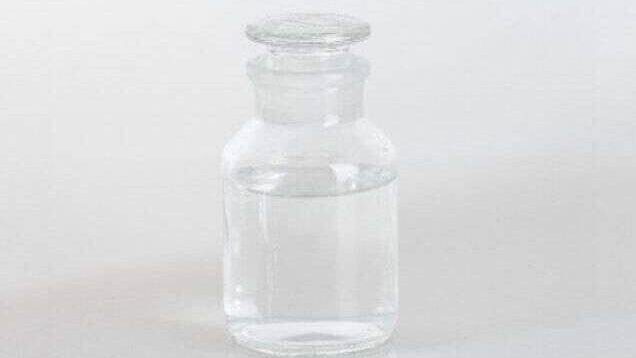
Choosing between Zinc Chloride 95% and Zinc Chloride 98% is not simply a question of buying the higher-purity product.
For an industrial buyer, the better question is: What purity and impurity limits does your process actually require?
The two grades differ not only in Zinc Chloride concentration but also in limits for iron, sulfate, water-insoluble matter, and heavy metals. The published specifications show that the 98% grade has substantially tighter impurity limits than the 95% industrial grade.
That can make 98% the appropriate choice for purity-sensitive processes. But where the process can tolerate the specifications of 95% Industrial Grade, paying for additional purity may not provide a meaningful operational benefit.
This guide compares Zinc Chloride 95% vs 98% from an industrial buyer’s perspective, including specifications, applications, procurement considerations, and what to verify before placing a bulk order.
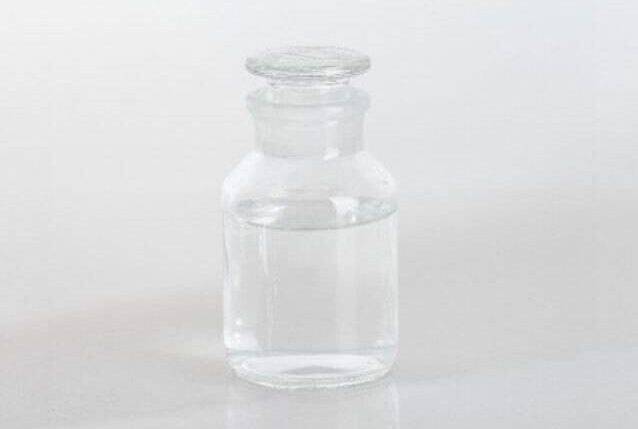
Industrial buyers should select Zinc Chloride according to process requirements rather than headline purity alone.
Zinc Chloride 95% vs 98% at a Glance
| Factor | Zinc Chloride 95% Industrial Grade | Zinc Chloride 98% High Purity |
| Minimum ZnCl₂ | 95.0% | 98.0% |
| Maximum iron (Fe) | 0.05% | 0.001% |
| Maximum sulfate | 0.05% | 0.01% |
| Maximum water insolubles | 0.1% | 0.05% |
| Maximum heavy metals as Pb | 0.05% | 0.002% |
| Typical positioning | Standard industrial applications | Performance- and purity-sensitive applications |
| Examples of applications | Galvanizing, oil & gas, textiles, rubber, paper & pulp | Battery manufacturing, chemical synthesis, catalysis, pharmaceutical applications, premium water treatment |
These figures are the published technical specifications for the two grades.
The most important difference is not the three-percentage-point increase in ZnCl₂ alone. The impurity limits are also much tighter in the 98% grade.
For example, the maximum iron specification decreases from 0.05% in 95% Industrial Grade to 0.001% in 98% High Purity. The maximum heavy-metal specification decreases from 0.05% to 0.002%.
That distinction matters when an industrial process is sensitive to contaminants rather than simply to the nominal ZnCl₂ concentration.
What Is the Difference Between Zinc Chloride 95% and 98%?
Both products are anhydrous Zinc Chloride, but they are manufactured to different purity specifications.
The 95% Industrial Grade has a minimum ZnCl₂ content of 95.0%. Its specifications allow higher levels of iron, sulfate, water-insoluble matter, and heavy metals than the 98% grade.
The 98% High Purity Grade has a minimum ZnCl₂ content of 98.0% and substantially tighter limits for several impurities.
This means the choice should be based on the tolerance of the manufacturing process.
A process that only requires Zinc Chloride as a functional industrial chemical may not benefit enough from the tighter specifications to justify the higher purchase cost. Conversely, a process where trace impurities can affect product quality, reaction performance, battery characteristics, or downstream processing may require the higher-purity grade.
The impurity specifications matter
Consider iron as an example:
- 95% Industrial Grade: maximum 0.05% Fe
- 98% High Purity: maximum 0.001% Fe
That is a significant difference in the permitted iron level. The same principle applies to heavy metals, sulfate, and water-insoluble material.
For procurement teams, this is why comparing only the number “95%” against “98%” is insufficient. The full specification should be reviewed before selecting a grade.
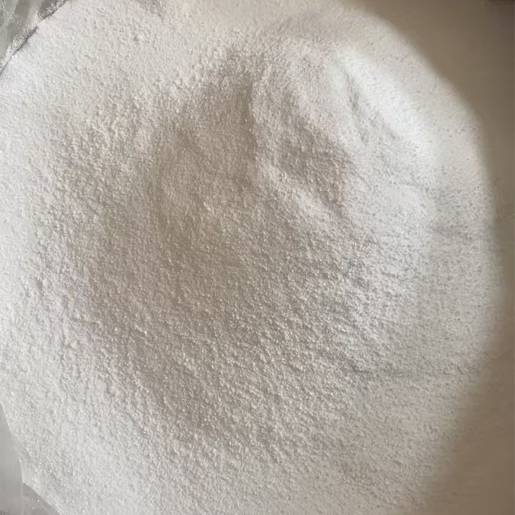
The full specification sheet provides a more useful comparison than Zinc Chloride purity alone.
Zinc Chloride 95% vs 98% Specifications
The published specifications are:
| Parameter | 95% Industrial Grade | 98% High Purity |
| Zinc Chloride (ZnCl₂) | Min. 95.0% | Min. 98.0% |
| Iron (Fe) | Max. 0.05% | Max. 0.001% |
| Sulfate (SO₄²⁻) | Max. 0.05% | Max. 0.01% |
| Water Insolubles | Max. 0.1% | Max. 0.05% |
| Heavy Metals (as Pb) | Max. 0.05% | Max. 0.002% |
Why this comparison matters to a bulk buyer
If your purchasing specification says “Zinc Chloride 98%” but does not define the impurity limits, you may still have an incomplete procurement requirement.
Two products can both be marketed around a headline purity number while differing in other parameters that affect your process.
A better purchasing specification should therefore identify:
- Minimum ZnCl₂ concentration
- Maximum iron
- Maximum sulfate
- Maximum water insolubles
- Maximum heavy metals
- Required COA information
- Packaging requirements
- Required documentation and compliance standards
This gives procurement and technical teams the same reference point when comparing suppliers.
When Should You Choose Zinc Chloride 95%?
Zinc Chloride 95% is positioned as the Industrial Grade for standard industrial applications. CamaZincChloride identifies metal processing and galvanizing, oil & gas, textile and fiber processing, rubber and vulcanization, and paper and pulp manufacturing among its applications.
Metal Processing and Galvanizing
Zinc Chloride is used as a flux in metal processing and galvanizing. It helps remove oxides from metal surfaces and supports adhesion of zinc coatings.
For a galvanizing operation, the critical question is whether the process specification requires the tighter impurity limits of the 98% grade.
There is real-world evidence for 95% use in this sector. A published case study describes a steel galvanizing plant in Poland purchasing 50 tons per shipment of 95% Industrial Grade Zinc Chloride after experiencing inconsistent quality from local suppliers.
A separate customer review from a South African technical director states that the company had been using Zinc Chloride 95% for steel galvanizing without reported quality problems.
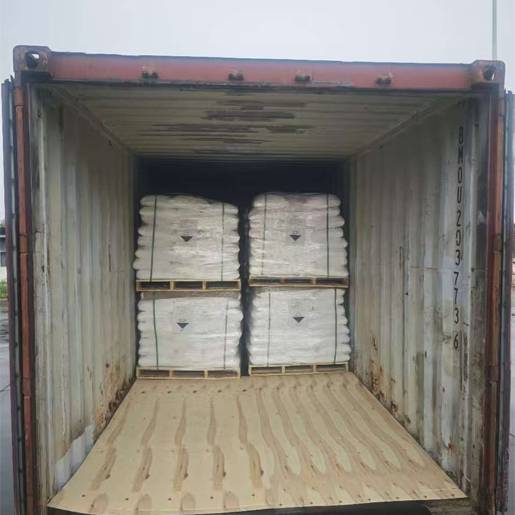
Zinc Chloride 95% is positioned for standard industrial applications including metal processing and galvanizing.
Oil & Gas
The application information identifies Zinc Chloride for uses including clay stabilization in drilling operations, oil-water separation, and sulfur removal from crude oil.
Where the process specification permits the 95% grade, Industrial Grade can provide a practical bulk option without automatically paying for a higher-purity specification.
The correct choice should still be confirmed against the buyer’s process and technical specification.
Textile and Fiber Processing
Zinc Chloride is used in textile and fiber processing for functions including dye fixation and improving fiber properties.
For these applications, the required grade should be determined by the manufacturing process and the acceptable impurity profile rather than by the assumption that higher purity is always necessary.
Rubber and Vulcanization
The application page identifies Zinc Chloride as an accelerator in rubber vulcanization, where it can support manufacturing speed and finished-product properties.
Again, the key procurement question is whether the process requires the tighter 98% impurity specifications.
Paper and Pulp Manufacturing
Zinc Chloride is also used in paper and pulp manufacturing, including applications associated with surface quality, durability, and recycled-paper de-inking.
For these standard industrial applications, 95% may be appropriate when it meets the buyer’s technical specification.
When Should You Choose Zinc Chloride 98%?
Zinc Chloride 98% is positioned as the High Purity Grade for more performance-sensitive applications.
The listed applications include:
- Battery manufacturing
- Chemical synthesis and catalysis
- Pharmaceutical applications
- Premium water treatment
- High-performance synthesis.
Battery Manufacturing
High-purity Zinc Chloride can be used as an electrolyte component in zinc-carbon and other specialized battery systems.
Where battery chemistry and product consistency are sensitive to impurities, the tighter specifications of 98% can be more relevant than the headline purity difference alone.
Zinc Chloride 98% is positioned for purity-sensitive applications such as battery manufacturing.
Chemical Synthesis and Catalysis
Zinc Chloride can function as a Lewis acid catalyst and dehydrating agent in chemical synthesis. The application information specifically identifies chemical synthesis and catalysis among the high-purity uses.
In synthesis applications, impurities can be more consequential because they may interact with reaction chemistry or downstream purification.
For that reason, technical buyers should evaluate the complete specification rather than simply comparing the ZnCl₂ percentage.
Pharmaceutical and High-Sensitivity Applications
The application page places pharmaceutical applications within the 98% High Purity category.
For regulated or highly sensitive processes, buyers should confirm the exact applicable product specification, documentation and regulatory requirements before ordering. The appropriate grade should be determined by the buyer’s validated process requirements rather than by a general statement that 98% is suitable for every pharmaceutical application.
Is Zinc Chloride 98% Always Better Than 95%?
No.
98% is the higher-purity grade, but that does not automatically make it the better procurement decision.
If a manufacturing process is designed around the 95% Industrial Grade specification, purchasing 98% could add cost without producing a corresponding operational benefit.
A published customer review provides a practical example: one buyer reported initially using 98% Zinc Chloride, then moving to 95% Industrial Grade because of the higher price of the 98% material and reporting that the 95% grade was working for the application.
The lesson is not that 95% is always preferable. The lesson is that grade selection should be based on process requirements.
A simple decision rule
Choose 95% Industrial Grade when:
- Your process accepts its specification limits.
- Trace impurities are not critical to your finished product.
- The application is a standard industrial use.
- The additional purity of 98% does not provide a measurable process benefit.
- Procurement economics favor the industrial grade.
Choose 98% High Purity when:
- Your process requires higher ZnCl₂ concentration.
- Iron or heavy metals must be tightly controlled.
- Water-insoluble matter must be lower.
- The process is sensitive to impurities.
- Your customer or internal specification requires the higher grade.
- You need the tighter specification for a performance-critical application.
Decision-Maker Insight: The lowest purchase price is not necessarily the lowest total cost. The right grade is the one that meets the process specification consistently without paying for purity your plant does not need.
Zinc Chloride 95% vs 98%: What About Price?
Higher-purity Zinc Chloride generally requires buyers to consider whether the tighter specification justifies its premium.
However, a supplier quotation should not be evaluated on purity percentage alone.
Compare:
- Price per metric ton
- ZnCl₂ specification
- Iron limit
- Sulfate limit
- Heavy-metal limit
- Water-insoluble limit
- COA availability
- Packaging configuration
- Shipping terms
- Lead time
- Sampling and trial-order arrangements
A lower-priced material that repeatedly fails the buyer’s specification can become more expensive through rejected batches, production disruption, additional testing, or rework.
Conversely, a 98% product can be unnecessary over-specification if a 95% product already satisfies the process.
The goal is specification-to-cost optimization, not simply buying the highest purity available.
How to Choose the Right Zinc Chloride Grade for Bulk Procurement
Before placing a bulk order, technical and procurement teams should work through the following checklist.
1. Define the process requirement
Start with the actual manufacturing process.
Ask:
- What function does Zinc Chloride perform?
- What purity is required?
- Are iron levels restricted?
- Are heavy metals restricted?
- Are insolubles important?
- Does the customer specification require a particular grade?
2. Compare the complete specification
Do not compare suppliers using “95%” or “98%” alone.
Request the full technical specification and compare the parameters side by side.
3. Review the batch COA
A Certificate of Analysis should allow the buyer to verify the relevant parameters for the supplied batch.
CamaZincChloride provides access to COA/MSDS documentation and offers sample requests before ordering.
4. Confirm packaging and shipment quantity
The published packaging options include:
- 25 kg bags
- 1,000 kg bags
- Up to 27 tons in a 20-foot container without pallets
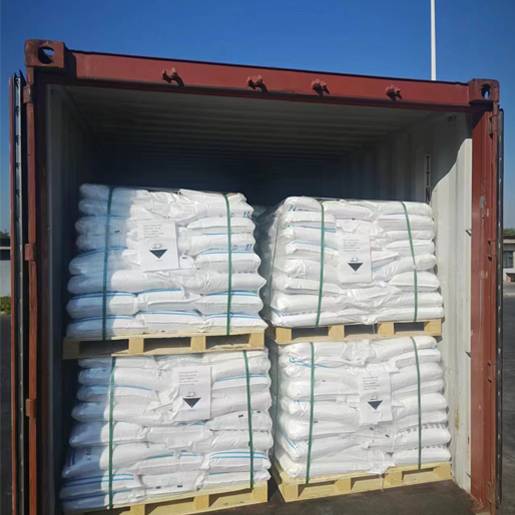
- Up to 25 tons in a 20-foot container with pallets.
The published shipping term is FOB Shanghai, with a typical lead time of 7–21 days.
For a first-time importer, these details matter because the apparent product price is only one component of delivered cost.
5. Request a sample before committing to regular supply
A sample allows the technical team to evaluate the material against its own process before committing to a larger order.
This is particularly useful when moving between grades or suppliers.

Supplier documentation and certification records are important parts of bulk Zinc Chloride qualification.
Why Supplier Verification Matters When Buying Zinc Chloride
Grade selection is only one part of a successful bulk purchase.
The supplier must also be able to consistently deliver material that matches the agreed specification.
Camachem states that it has supplied Zinc Chloride for more than 15 years and invites qualified buyers to visit the factory and review the production process. The company also describes international support across China, the UK, the U.S., Africa and Brazil.
The specifications page lists REACH, ISO, NFS, SGS and Halal/Kosher among its quality/compliance credentials and identifies SGS and BV certification in its quality section.
For a bulk buyer, the practical objective is to verify which documentation applies to the exact product and shipment being purchased.
A useful supplier-qualification process should include:
- Technical specification review
- Batch COA review
- MSDS/SDS review
- Certification/document verification
- Sample testing
- Packaging inspection
- Factory verification where appropriate
- Agreement on shipment and quality requirements
For a deeper supplier-verification framework, see how to buy Zinc Chloride as a first-time importer.
95% vs 98%: A Practical Grade-Selection Matrix
| If your requirement is… | More appropriate starting point |
| Standard galvanizing/metal processing | 95% Industrial Grade |
| Standard oil & gas application | 95% Industrial Grade |
| Textile/fiber processing | 95% Industrial Grade |
| Rubber processing | 95% Industrial Grade |
| Paper & pulp | 95% Industrial Grade |
| Battery manufacturing | 98% High Purity |
| Chemical synthesis/catalysis | 98% High Purity |
| Purity-sensitive processing | 98% High Purity |
| Process with strict iron limits | 98% High Purity |
| Process with strict heavy-metal limits | 98% High Purity |
This matrix is a starting point, not a substitute for the buyer’s own technical specification. The published application positioning distinguishes 95% Industrial Grade from 98% High Purity in broadly the same way.
For a broader overview of applications, see the top Zinc Chloride applications.
Technical Note: The most important specification difference may not be the three-percentage-point increase in ZnCl₂. For a sensitive process, the much tighter limits for iron, sulfate, water insolubles and heavy metals can be more consequential. Always compare the complete specification and batch COA.
Real-World Bulk Buying Examples
Published customer and case-study information shows that both grades are being used in significant industrial quantities.
Examples include:
- A Polish steel galvanizing plant using 95% Industrial Grade at 50 tons per shipment.
- A South African metal galvanizing operation sourcing 98% High Purity at 25 tons per shipment.
- A Peruvian construction galvanizer purchasing 95% at 100 tons per quarter.
- An Australian industrial wastewater operation using 98% at 30 tons per month.
- A U.S. chemical-trading customer sourcing 98% at 75 tons per quarter.
These examples demonstrate an important point: both grades can support substantial industrial supply programs.
The correct grade depends on the application’s specification rather than on order volume alone.
What Should You Verify Before Ordering Zinc Chloride?
Before approving a supplier, confirm:
Product
- Is the product 95% or 98%?
- Is it anhydrous Zinc Chloride?
- Does the specification match your process?
Quality
- What is the minimum ZnCl₂?
- What is the maximum iron?
- What is the maximum sulfate?
- What is the maximum water-insoluble content?
- What is the maximum heavy-metal content?
Documentation
- Is a batch-specific COA provided?
- Is an MSDS/SDS available?
- Which certifications and compliance documents apply?
- Can the supplier provide samples before the first bulk order?
Logistics
- What packaging is available?
- What is the shipment quantity?
- What Incoterm applies?
- What is the expected lead time?
- How will pallets or non-palletized bags affect container loading?
Supplier reliability
- Can the factory be verified?
- Is the supplier experienced in international bulk shipments?
- Can the supplier maintain the same specification across repeat orders?
For additional guidance, see Zinc Chloride supplier certifications.
Zinc Chloride 95% vs 98%: Final Decision
The choice between Zinc Chloride 95% and 98% should be based on what your process actually requires.
Choose 95% when:
Your application is a standard industrial process and the 95% specification meets your technical requirements. It can be a more economical choice where tighter purity limits do not provide a meaningful operational advantage.
Choose 98% when:
Your application is purity-sensitive or requires tighter limits for iron, sulfate, water insolubles, heavy metals, or overall ZnCl₂ concentration.
If you are unsure:
Do not select the grade based only on the product name.
Send the supplier your process specification or current COA requirements and compare the proposed material parameter by parameter.
For bulk buyers, the safest procurement decision is the one that balances technical suitability, consistency, documentation, logistics and total cost.
Frequently Asked Questions
Is Zinc Chloride 98% better than 95%?
98% has a higher minimum ZnCl₂ concentration and tighter limits for several impurities. However, it is not automatically better for every industrial application. If a process is designed around the 95% specification, Industrial Grade may be the more economical choice.
Which Zinc Chloride grade is best for galvanizing?
95% Industrial Grade is positioned for metal processing and galvanizing, and published customer examples include steel and construction galvanizing operations using 95%. However, some galvanizing-related applications use 98%, so the final selection should follow the plant’s technical specification.
Is Zinc Chloride 95% suitable for industrial applications?
Yes. It is specifically positioned as Industrial Grade for applications including metal processing and galvanizing, oil & gas, textile and fiber processing, rubber and vulcanization, and paper and pulp manufacturing.
When should a manufacturer use 98% Zinc Chloride?
98% is a logical starting point when the process is sensitive to impurities or requires a higher-purity specification. CamaZincChloride positions it for battery manufacturing, chemical synthesis and catalysis, pharmaceutical applications, premium water treatment and other high-performance uses.
Does 98% Zinc Chloride cost more than 95%?
The higher-purity grade can carry a premium, but the actual price depends on market conditions, order quantity, packaging, specifications and logistics. Buyers should request current quotations rather than relying on historical published prices.
What should I check on a Zinc Chloride COA?
At minimum, compare the ZnCl₂ concentration, iron, sulfate, water insolubles and heavy-metal specifications against the agreed product specification. The buyer should also confirm that the COA applies to the relevant shipment or batch.
Can I request a Zinc Chloride sample before placing a bulk order?
Yes. CamaZincChloride provides a sample-request process for industrial buyers.
Industrial Buyers: Next Steps for Sourcing Bulk Zinc Chloride
What makes our Zinc Chloride Better:
✅ Compliant with EU, UN, ISO Standards – No Legal Headaches
✅ Guaranteed Purity – Stability for your Processing Plant
✅ Batch-Specific COA Provided – Full Transparency per Shipment.
Download Our EU-approved FREE COA & Specifications. Specifications Page