




If you want to buy zinc chloride for your business but have never imported a chemical before, the process can feel overwhelming fast. You’re not alone — most first-time importers hit the same roadblocks: confusing regulations, sketchy suppliers, and unexpected costs that blow the budget.
This guide is for small business owners, lab managers, and procurement teams who are ready to place their first order but don’t know where to start.
We’ll walk you through the three things that trip people up most:
-
Finding a supplier you can actually trust instead of gambling on a random listing
-
Understanding the real cost beyond just the product price — think shipping, duties, and fees
-
Getting through customs without delays that hold up your operations
No jargon, no fluff — just a straight path from “I need this chemical” to “it’s in my warehouse.”
Understand What Zinc Chloride Is and Why It Matters
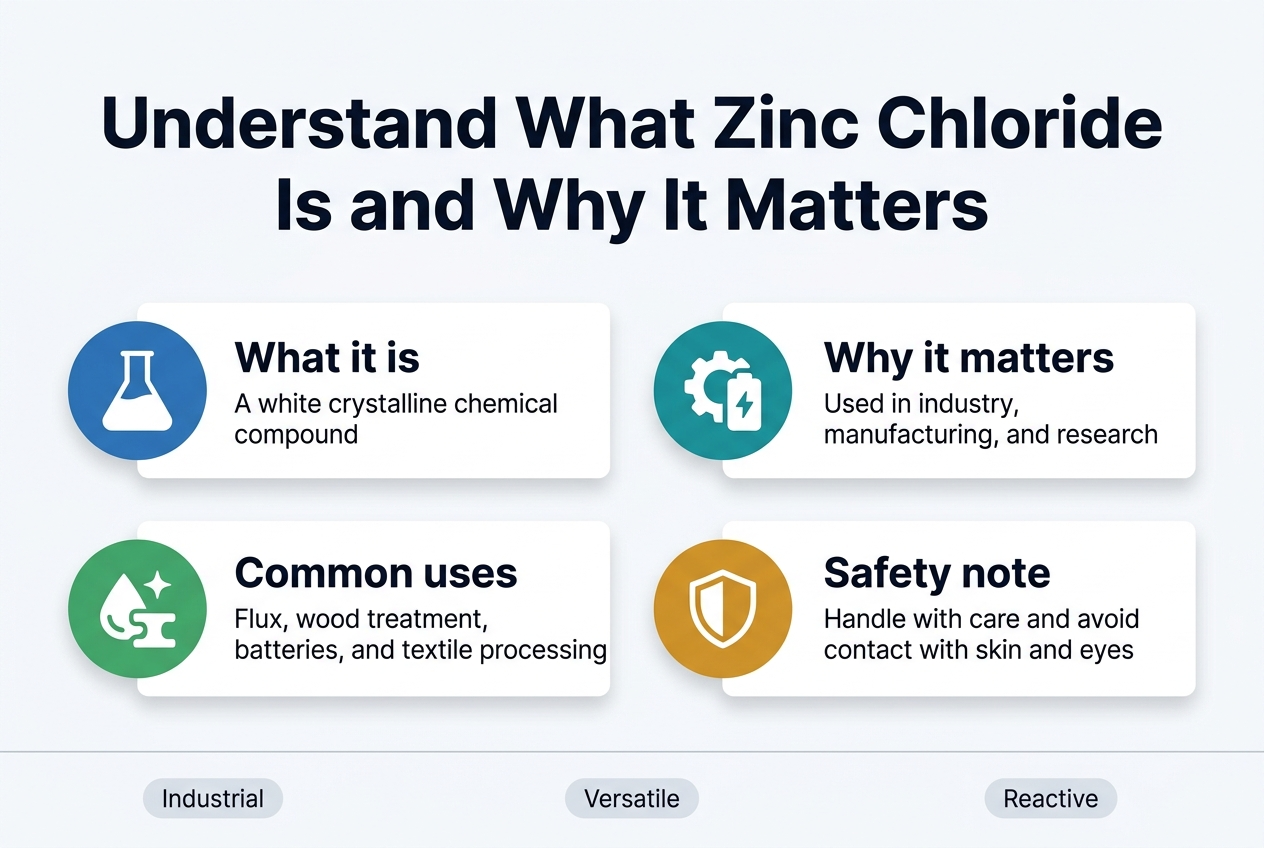
Key Properties and Common Industrial Uses of Zinc Chloride
Zinc chloride (ZnCl₂) is a white crystalline solid that dissolves easily in water and is highly hygroscopic — meaning it pulls moisture right out of the air. It has a sharp, acidic character and works as both a flux and a drying agent, which makes it incredibly versatile across industries.
Here’s where zinc chloride shows up most often:
-
Metal processing – used as a flux in soldering and galvanizing to clean metal surfaces before joining
-
Textile manufacturing – helps with mercerizing cotton and producing fireproof fabrics
-
Chemical synthesis – acts as a Lewis acid catalyst in organic reactions
-
Battery production – a core component in dry-cell zinc-carbon batteries
-
Water treatment – used as a disinfectant and deodorizer
-
Timber preservation – protects wood against rot and insects
When you decide to buy zinc chloride, knowing its end application helps you make smarter purchasing decisions from the start.
Different Grades Available and How to Choose the Right One
Not all zinc chloride is the same. Choosing the wrong grade can affect product performance or even create compliance issues.
| Grade | Purity Level | Typical Use |
|---|---|---|
| Technical/Industrial | 96–98% | Metal fluxing, galvanizing |
| Reagent/Lab Grade | 98–99%+ | Chemical synthesis, research |
| Battery Grade | 98%+ with strict metal limits | Dry-cell battery manufacturing |
| Pharmaceutical Grade | USP/EP compliant | Dental cements, medical use |
Always match the grade to your specific application. Using technical-grade material in a pharmaceutical setting, for example, isn’t just inefficient — it can be dangerous and non-compliant.
Why Quality Consistency Is Critical for Your Business
A one-time good batch from a supplier means nothing if the next shipment has higher moisture content or trace metal contamination. Inconsistent quality creates downstream problems — failed quality checks, production downtime, and unhappy customers on your end.
Look for suppliers who can provide:
-
Certificate of Analysis (CoA) with every shipment
-
Third-party lab testing options
-
Stable production standards backed by ISO certification
Quality consistency isn’t a bonus — it’s the baseline. Before you commit to any supplier, ask for sample batches and run your own verification tests. That’s how experienced importers protect themselves.
Know the Import Regulations Before You Place an Order
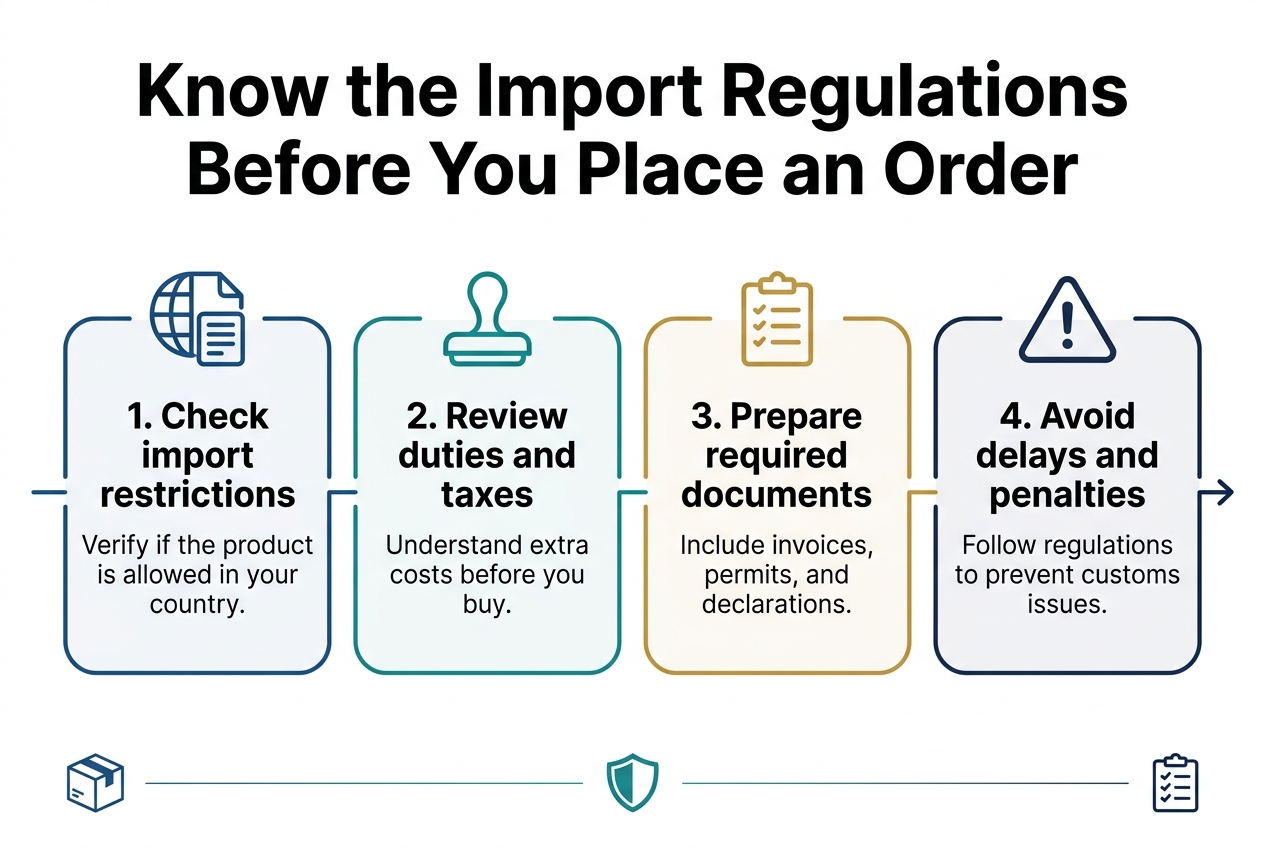
Classify Zinc Chloride Correctly Using HS Codes
Getting the HS code right is the first thing you need to sort out before you buy zinc chloride. The correct code is 2827.10.00 (zinc chloride), which falls under inorganic chemicals. Using the wrong code can trigger delays, fines, or even seizure of your shipment.
-
Double-check the code with your country’s customs authority website
-
Confirm the code with your freight forwarder before filing any paperwork
-
Different grades (anhydrous vs. solution) may have slight classification nuances depending on the destination country
Understand Safety and Hazardous Material Requirements
Zinc chloride is classified as a hazardous material — it’s corrosive and can cause serious damage to eyes, skin, and the respiratory system. This directly affects how it gets shipped and handled.
Key points to know:
| Regulation Area | What It Means for You |
|---|---|
| UN Number | UN 2331 (anhydrous) / UN 1840 (solution) |
| Hazard Class | Class 8 – Corrosive |
| Packaging Group | III |
| SDS Requirement | Supplier must provide a Safety Data Sheet |
Carriers will refuse your shipment if the packaging and labeling don’t match these standards. Always ask your supplier for proper GHS-compliant labels and the SDS before shipping.
Check Country-Specific Import Restrictions and Permits
Regulations vary a lot depending on where you’re importing to. Some countries require special permits for chemical imports, even for industrial-grade zinc chloride.
Things to verify for your specific country:
-
Is a chemical import license required?
-
Does your end-use need to be declared (industrial, agricultural, etc.)?
-
Are there any quantity thresholds that trigger additional scrutiny?
-
Is zinc chloride on any dual-use or controlled substance list in your country?
Check with your local customs authority or a licensed customs broker — don’t rely on the supplier alone for this information.
Prepare the Necessary Documentation in Advance
Having your paperwork ready before the shipment leaves the supplier’s facility saves you from costly delays at the port.
Standard documents you’ll need:
-
Commercial Invoice — with correct HS code and declared value
-
Packing List — including net/gross weight and packaging type
-
Certificate of Analysis (COA) — confirms purity and grade
-
Safety Data Sheet (SDS)
-
Bill of Lading or Airway Bill
-
Import Permit (if required in your country)
Some countries also ask for a Material Safety Data Sheet (MSDS) as a separate document from the SDS — confirm this early with your customs broker.
Find a Reliable Zinc Chloride Supplier You Can Trust
When you want to buy zinc chloride from overseas, start with platforms that already vet their sellers:
-
Alibaba & Global Sources – filter by “Verified Supplier” or “Gold Supplier” badges
-
Made-in-China.com – strong for Chinese chemical manufacturers
-
ICIS & ChemNet – industry-specific directories with chemical-grade listings
-
Trade shows like China Import & Export Fair (Canton Fair) for face-to-face vetting
Always cross-check company registration numbers and ask for their business license upfront.
Key Criteria to Evaluate a Supplier Before Committing
Not every supplier with a slick website is worth your money. Run through this checklist:
| Criteria | What to Look For |
|---|---|
| Certifications | ISO 9001, SGS, or relevant chemical compliance docs |
| Production capacity | Can they handle your order volume consistently? |
| Export experience | Have they shipped to your country before? |
| Communication speed | Do they respond within 24 hours? |
| Payment terms | Flexibility on T/T, LC, or escrow options |
How to Request and Assess Product Samples Effectively
Always request a sample before placing a bulk order — no exceptions. Here’s how to do it right:
-
Ask for a Certificate of Analysis (CoA) alongside the physical sample
-
Specify the grade you need — industrial, reagent, or anhydrous zinc chloride
-
Send the sample to an accredited third-party lab in your country for independent testing
-
Compare purity levels, moisture content, and particle size against your specs
-
Track how long the supplier takes to send the sample — it tells you a lot about their reliability
Red Flags to Avoid When Shortlisting Vendors
Watch out for these warning signs:
-
Prices dramatically lower than market average (often signals poor quality or a scam)
-
Reluctance to share factory audit reports or certifications
-
Vague answers about production location or lead times
-
Pushing you to wire money before any paperwork is signed
-
No verifiable physical address or business registration
Build Long-Term Supplier Relationships for Better Pricing
Once you find a good supplier, treat them like a business partner. Place consistent orders, pay on time, and give feedback on quality. Over time, you can negotiate volume discounts, better payment terms, and priority production slots — benefits that one-time buyers rarely get.
Negotiate Pricing and Understand Total Import Costs
Get Accurate Quotes by Specifying Quantity and Grade
When you reach out to suppliers to buy zinc chloride, vague inquiries get vague prices. Always specify:
-
Purity/grade – industrial grade (typically 98%), reagent grade, or anhydrous vs. hydrated (ZnCl₂·xH₂O)
-
Quantity – in metric tons (MT); most suppliers have MOQs between 1–25 MT
-
Packaging – 25 kg bags, 1 MT jumbo bags, or drums
-
Delivery timeline – spot order or recurring contract
Suppliers price differently based on all of these factors. A 1 MT trial order of reagent-grade anhydrous zinc chloride costs significantly more per kg than a 20 MT bulk order of industrial grade. Get at least three quotes and ask each supplier to break down the unit price clearly.
Factor in Freight, Insurance, and Customs Duties
The supplier’s quoted price is rarely your final landed cost. First-time importers often get caught off guard by these additional expenses:
-
Ocean/air freight – varies by origin (China is the dominant exporter), destination port, and container type (LCL vs. FCL)
-
Marine insurance – typically 0.3%–0.5% of cargo value; skipping it is a risk not worth taking with hazardous chemicals
-
Import duties – zinc chloride (HS code 2827.10) carries different tariff rates by country; check your national customs database
-
Port handling and local delivery – drayage, terminal fees, and last-mile trucking add up fast
-
Customs broker fees – usually $150–$400 per shipment
Use a landed cost calculator or ask a freight forwarder to give you a full cost breakdown before committing to an order.
Compare FOB vs CIF Pricing to Protect Your Margins
| Term | What the Supplier Covers | What You Arrange |
|---|---|---|
| FOB | Goods loaded at origin port | Freight, insurance, customs |
| CIF | Goods + freight + insurance to destination port | Customs clearance, local delivery |
FOB pricing gives you more control — you choose your freight forwarder and can often negotiate better shipping rates than the supplier offers. CIF looks convenient, but the supplier marks up freight and insurance, quietly eating into your margins.
For repeat buyers, FOB almost always works out cheaper. For a one-time trial shipment where simplicity matters more, CIF can reduce the moving parts you need to manage.

Conclusion
Importing zinc chloride for the first time doesn’t have to be complicated. The key is getting the important decisions right before you place your first order: choose the right specification, understand your import requirements, verify the supplier, and calculate your true landed cost.
If you’re buying zinc chloride in bulk, the supplier you choose can have a major impact on your product quality, delivery reliability, and overall cost. Don’t make your first shipment a learning experience at your own expense.
If you’re considering importing zinc chloride from China, CAMACHEM can help. We can help you identify suitable manufacturers, compare suppliers, verify factories, and understand the costs and risks involved before you commit to an order.
Contact us for a free consultation and tell us what zinc chloride you need, how much you’re looking to buy, and where you need it delivered. We’ll help you determine the best way to approach your first import.