



If you searched “zinc chloride vs ammonium chloride”, you are probably not trying to pick one over the other. Most buyers who compare these two chemicals are sourcing flux for hot-dip galvanizing, and they need both because galvanizing flux almost always uses them together.
Why This Comparison Comes Up
Quick reasons buyers land on this comparison:
- Sourcing flux components for a new or existing galvanizing line
- Trying to understand why a flux formulation uses both chemicals
- Checking whether a supplier’s ratio or spec makes sense before ordering
- Vetting a Chinese supplier for the first time and wanting to sound informed
This guide breaks down what each chemical does, how they differ, and what to check before you order either one in bulk.

A physical comparison showcasing the visual differences between Zinc Chloride and Ammonium Chloride.
Zinc Chloride vs Ammonium Chloride at a Glance
Chemical Profile Comparison
| Property | Zinc Chloride (ZnCl₂) | Ammonium Chloride (NH₄Cl) |
| Appearance | White crystalline granules or pearls | White crystalline solid |
| Solubility | Highly soluble, deliquescent | Soluble in water |
| Behavior in water | Acidic solution; stronger hydrolysis | Mildly acidic solution |
| Main role in flux | Base fluxing agent; prevents flash rust between pickling and dipping | Active oxide-removal agent at the zinc kettle |
| Grades we supply | 95% Industrial, 98% High-Purity | Sourced as a separate flux component |
Both chemicals form acidic solutions in water, but zinc chloride is the more strongly acidic of the two. That difference in chemistry is part of why they play different roles once mixed into a flux tank.
Who This Comparison Is For
- Galvanizers formulating or troubleshooting a flux tank
- First-time importers sourcing flux chemicals from China and wanting to sound informed before they order
- Technical staff who need to explain grade and ratio choices to a purchasing decision-maker
- Anyone comparing supplier quotes that reference “zinc ammonium chloride” salts rather than the two chemicals separately
WhatsApp Us for Free a Consultation
What Zinc Chloride Does in the Process
The Protective Layer
- Sits on the steel surface right after pickling
- Stops new oxide from forming before the metal reaches the zinc bath
- Buys time between the pickling tank and the kettle, when the steel is most chemically active
Freshly pickled steel is not stable. The acid cleaning step strips away mill scale and old oxide, but it also leaves the surface highly reactive. Without a protective flux layer, that surface starts forming new oxide again within minutes of exposure to air, which is exactly the problem zinc chloride is there to prevent.
Grade Selection for This Application
- Typically supplied at 95% Industrial Grade for standard flux work
- The 98% High Purity grade is not usually needed here, since this application does not require the tighter impurity limits that grade offers
- Grade choice affects cost more than performance for most galvanizing lines
Grade selection matters here — see our guide on selecting the right grade for hot-dip galvanizing for how buyers make that call.

Zinc chloride protects freshly pickled steel from re-oxidizing before it reaches the zinc bath.
What Ammonium Chloride Does in the Process
The Kettle Reaction
- Reacts at the temperature of the molten zinc kettle
- Strips away any remaining surface film on the steel
- Helps the zinc coating bond properly to the base metal
Ammonium chloride is the more chemically active partner of the two. Zinc chloride’s job ends once the steel enters the kettle; ammonium chloride’s job starts there. It is rarely used alone — almost always blended with zinc chloride, either mixed separately or pre-combined as a “zinc ammonium chloride” salt.
What Happens Without It
Galvanizers who skip or under-dose ammonium chloride typically see:
- Poorer coating adhesion
- More dross buildup at the kettle
- Uneven, patchy finishes on the finished steel
The Ratio Question: Why Buyers Need Both, Not One
The Ammonium Chloride Number (ACN)
The industry describes flux composition using the Ammonium Chloride Number (ACN) – the ratio of ammonium chloride to zinc chloride in the mix.
| Salt Type | Formula | Approx. ACN | Typical Use |
| Mono salt | ZnCl₂·NH₄Cl | ~0.39 | Lower fluxing strength |
| Double salt | ZnCl₂·2NH₄Cl | ~0.79 | Common general-purpose mix |
| Triple salt | ZnCl₂·3NH₄Cl | ~1.18 | Faster drying, low fuming |
| Quad salt | ZnCl₂·4NH₄Cl | ~1.57 | High fluxing strength |
What Changes with a Higher ACN
A higher ACN means more ammonium chloride relative to zinc chloride, which changes:
- Fluxing strength
- Fuming behavior
- How quickly the flux dries on the steel
There is no single “correct” ratio for every operation — it depends on line speed, steel type, and whether the process is wet-flux or dry-flux. This is exactly why buyers compare zinc chloride and ammonium chloride in the first place: not to choose one, but to understand what each brings to the mix before agreeing on a formulation with a supplier.
Decision-Maker Insight: The real cost risk in galvanizing flux isn’t the price per kilogram of either chemical — it’s inconsistent purity from batch to batch. A supplier who can’t provide a Certificate of Analysis for every shipment is a bigger financial risk than a slightly higher quoted price. If you’re weighing suppliers on flux components, ask for our specifications and a batch-specific COA before committing to volume. For sourcing questions specific to your region, reach Tina (+86-157-2476-6919, Australia/Europe/North America) or Nancy (+86-135-5206-8103, Africa/Asia/South America) directly on WhatsApp.
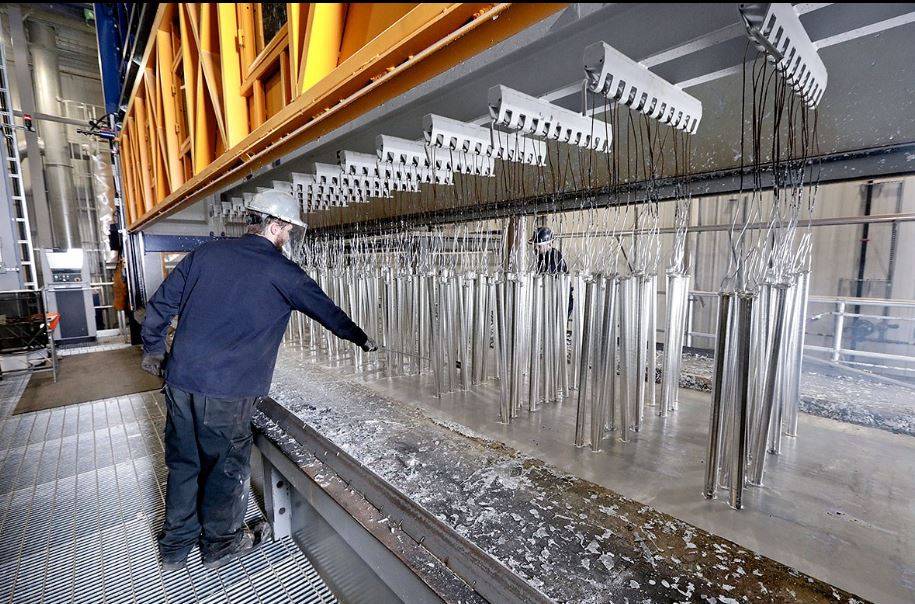
Getting the flux ratio right starts with knowing what each chemical contributes.
Technical Note: Higher-ACN formulations generally suit low-fuming, fast-drying applications, while lower-ACN mixes suit continuous sheet lines. If you’re buying the chemicals separately rather than as a pre-mixed salt, our 95% vs 98% grade comparison explains which zinc chloride purity level fits which application.
WhatsApp Us for Free a Consultation
Bulk Procurement Checklist for Flux Chemicals
Six Checks Before You Order
| # | Check | Why It Matters |
| 1 | Grade and purity | Most galvanizing flux work only needs 95% industrial-grade zinc chloride, not 98% |
| 2 | Certifications | Look for REACH, ISO 9001, and SGS or equivalent third-party testing on every batch |
| 3 | Certificate of Analysis (COA) | Confirm the supplier issues a COA per shipment, not a reused generic spec sheet |
| 4 | Packaging | Both chemicals ship under UN-regulated hazard classifications — confirm moisture-resistant bagging and correct labeling |
| 5 | Sample policy | A supplier willing to send 500g–1kg before a bulk order is signaling confidence in their own product |
| 6 | Supplier verification | For a first-time China import, confirm you’re dealing with a real manufacturer, not a trading middleman |
Packaging and Documentation
- Standard formats include 25kg bags and 1,000kg bulk bags — see our packaging options
- Every shipment should ship with hazard labeling that matches the UN classification for the chemical
- Ask for the COA before the shipment leaves the factory, not after it arrives

UN-compliant packaging and clear labeling should be non-negotiable on any bulk flux order.
First-Time Importer Resources
If this is your first time importing either chemical from China:
- Our guide for first-time importers covers the documentation questions most buyers ask before their first order
- Our list of certifications to verify breaks down what each certification actually confirms
- Our guide to choosing a reliable bulk supplier explains how to tell a real manufacturer from a trading middleman
- Nancy and Tina are both reachable directly on WhatsApp for regional sourcing questions
Real Results: Galvanizers Who Made This Work
Case Studies from Our Galvanizing Customers
| Location | Customer Type | Challenge | Solution | Outcome |
| Poland | Steel Galvanizing Plant (first-time importer) | Inconsistent quality from local suppliers, causing production downtime | Consistent 95% Industrial Grade zinc chloride, reliable fluxing | 50 tons per shipment; ongoing partnership |
| South Africa | Metal Galvanizing | Needed a reliable source of 98% High Purity zinc chloride for specialized corrosion protection | Certified 98% grade with secure, on-time international shipping | 25 tons per shipment; new supply agreement |
See more in our success stories.
A Note on Verification
Our sister company Camasteel applies the same factory-visit standard to steel sourcing that we use for chemical buyers — verifying a supplier in person is a standard we hold across the group, not just on this site.
Ready to Buy Zinc Chloride From a Verified Source?
Contact our team today for a quotation, sample, and delivery timeline.
WhatsApp Us for Free a Consultation
Zinc Chloride in Industrial Applications: See it in Action!
Want to see how zinc chloride is used in a real industrial setting? Check out this short video. It demonstrates its crucial role in the metal treatment process.
FAQ
What is the difference between zinc chloride and ammonium chloride in galvanizing flux?
- Zinc chloride protects pickled steel from re-oxidizing before it enters the zinc bath
- Ammonium chloride is the more chemically active component that strips remaining surface film at the kettle and improves coating adhesion
Can I use ammonium chloride without zinc chloride in flux?
- Uncommon — the two are almost always blended, either mixed separately or supplied as a pre-combined zinc ammonium chloride salt, because they perform different functions
What ratio of zinc chloride to ammonium chloride should I use?
- No universal ratio — it depends on line type, steel, and whether the process is wet or dry flux
- Common pre-mixed salts run roughly 0.39–1.57 on the Ammonium Chloride Number scale
- Your flux supplier or consultant can help match a ratio to your process
Do I need 95% or 98% zinc chloride for galvanizing flux?
- Most standard galvanizing flux work uses 95% Industrial Grade
- 98% High Purity is typically reserved for more performance-critical applications
What certifications should I ask for when buying either chemical in bulk?
- REACH, ISO 9001, and SGS or an equivalent third-party test
- A batch-specific Certificate of Analysis for every shipment

Supplier verification should include current quality documentation and batch-specific product records.
Industrial Buyers: Next Steps for Sourcing Bulk Zinc Chloride
What makes our Zinc Chloride Better:
✅ Compliant with EU, UN, ISO Standards – No Legal Headaches
✅ Guaranteed Purity – Stability for your Processing Plant
✅ Batch-Specific COA Provided – Full Transparency per Shipment.
Download Our EU-approved FREE COA & Specifications. Specifications Page