



If you’re weighing zinc chloride vs copper chloride for your next industrial order, the two chemicals get grouped together often — both are metal chloride salts, both show up in etching and metal-treatment processes, and both get sourced in bulk from China. If you’re evaluating the wider zinc chloride sourcing market in China, it helps to compare supplier capability, specifications, and documentation before requesting quotations. But they behave differently, cost differently, and fit different jobs. Picking the wrong one doesn’t just waste a budget — it can slow down your production line or fail a spec check with your own customers.
This guide breaks down what each chemical actually does, where they overlap, and how to think about sourcing whichever one your process needs.
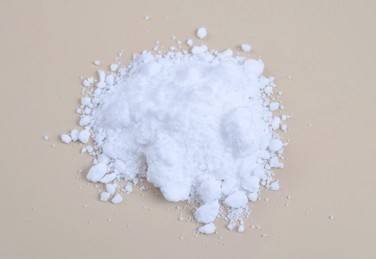
Zinc chloride in its anhydrous crystalline form — the starting point for the comparison below.
What Is Zinc Chloride?
Core Properties and Grades
Zinc chloride (ZnCl₂) is a highly water-soluble salt used across a wide range of industrial processes. Suppliers generally offer two grades:
- 95% industrial grade — used in galvanizing flux, water treatment, textile processing, and oil & gas applications
- 98% battery grade —Buyers comparing 95% and 98% material should also review the technical specifications and impurity limits rather than comparing purity percentages alone.
Where It’s Produced and Sourced
Zinc chloride production in China clusters around industrial chemical zones in Hebei, Shandong, and Jiangsu provinces, with export shipments commonly routed through Qingdao and Tianjin ports. Container shipping to North America, Europe, and Australia typically runs 25–40 days depending on the destination port, while bulk-bag jumbo shipments are more common for orders over 100 tons.
Decision-Maker Insight: If your process only needs 95% grade, don’t overpay for 98% battery-grade material — the price difference is real, and industrial-grade zinc chloride meets galvanizing, water treatment, and most textile-processing specs without it.
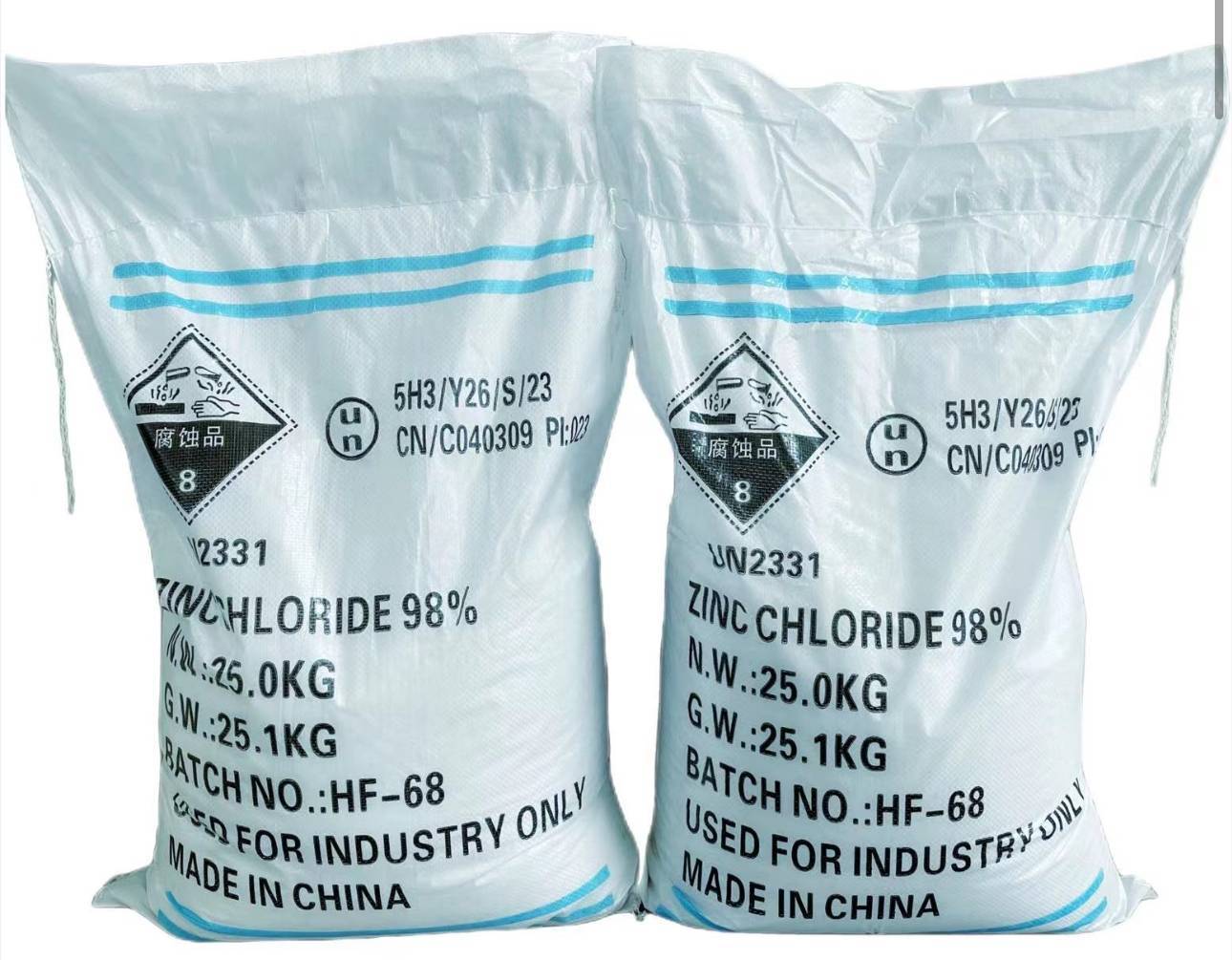
UN 2331, Class 8 compliant packaging — 25kg/50kg bags or 1,000kg jumbo bags depending on order size.
What Is Copper Chloride?
Core Properties and Grades
Copper chloride comes in two distinct forms with very different chemistry:
- Copper(I) chloride (CuCl) — used in organic synthesis, catalysis, and pigment production
- Copper(II) chloride (CuCl₂) — used in PCB etching, wood preservation, and as an oxidizing agent in various industrial reactions
Unlike zinc chloride’s straightforward 95%/98% grade split, copper chloride buyers need to confirm which oxidation state (CuCl vs. CuCl₂) their process actually requires — the two are not interchangeable.
Where It’s Produced and Sourced
Copper chloride manufacturing is more concentrated among specialty chemical producers, often in Jiangsu and Zhejiang provinces, and typically ships in smaller volumes than zinc chloride given its narrower set of high-purity end uses.
Zinc Chloride vs Copper Chloride: Side-by-Side Comparison
| Factor | Zinc Chloride (ZnCl₂) | Copper Chloride (CuCl / CuCl₂) |
| Common grades | 95% industrial, 98% battery | CuCl, CuCl₂ (distinct compounds) |
| Primary industries | Water treatment, galvanizing, textiles, battery, oil & gas | PCB etching, organic synthesis, wood preservation, catalysis |
| Solubility in water | Very high | High (CuCl₂ more soluble than CuCl) |
| Typical order volume | 25 tons (1 container) and up | Often smaller, application-specific batches |
| Packaging standard | UN 2331, Class 8 — 25kg/50kg bags, 1,000kg jumbo bags | Similar hazmat packaging, typically smaller unit sizes |
| Relative cost | Generally lower cost per ton | Generally higher cost per ton |
Where the Two Overlap
Both chemicals are used in metal surface treatment, which is where buyers most often end up comparing them directly. Zinc chloride is the standard flux component in hot-dip galvanizing, helping molten zinc bond cleanly to steel. Copper(II) chloride, by contrast, shows up in etching processes — most notably PCB manufacturing, where it dissolves exposed copper to create circuit patterns.
If your process is galvanizing or general metal-coating work, zinc chloride is almost always the right fit. Buyers working specifically with galvanizing flux can also review this zinc chloride galvanizing guide for grade and impurity considerations. If your process is etching or removing copper specifically, copper chloride is the one you need — zinc chloride won’t do that job.
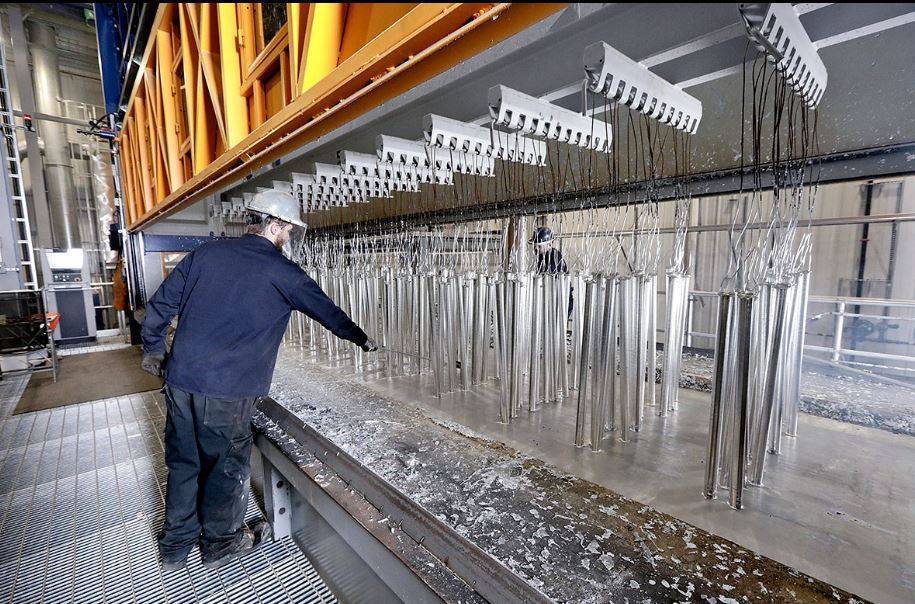
Zinc chloride flux cleans oxide layers off steel before galvanizing — a different mechanism entirely from copper chloride etching.
Technical Note: Zinc chloride’s flux action works by cleaning oxide layers off the steel surface before galvanizing, not by dissolving the base metal. Copper(II) chloride’s etching action works the opposite way — it actively dissolves copper through an oxidation reaction. These are chemically distinct mechanisms, which is why substituting one for the other isn’t viable even in adjacent-sounding applications.
Ready to Buy Zinc Chloride From a Verified Source?
Contact our team today for a quotation, sample, and delivery timeline.
WhatsApp Us for Free a Consultation
How to Choose Between Them
Ask these three questions before placing an order:
- What is the actual chemical reaction in my process? If you’re bonding, coating, or treating water — zinc chloride. If you’re etching, dissolving copper, or running organic synthesis — copper chloride.
- What purity/grade does my downstream spec require? Zinc chloride’s 95%/98% split is simpler to navigate than copper chloride’s CuCl vs. CuCl₂ distinction — confirm the exact compound, not just “copper chloride,” with your technical team.
- What volume am I actually ordering? Zinc chloride bulk pricing improves significantly at container-load volumes (25+ tons). Copper chloride orders are more often sized to a specific batch process, so volume discounts work differently.
Sourcing Either Chemical From China: What First-Time Importers Should Check
Whether you land on zinc chloride or copper chloride, the sourcing risks are similar. Before committing to a supplier:
- Confirm it’s a factory, not just a trading company. Ask for a factory visit or a live video walkthrough and review the supplier’s company and manufacturing information before committing to a bulk order.
- Request a Certificate of Analysis (CoA) per batch, not a generic spec sheet. Batch-specific documentation is standard practice among serious suppliers.
- Check for ISO 9001, SGS, and REACH certification before assuming compliance — don’t take a supplier’s word for it without documentation.
- Confirm UN 2331, Class 8 hazmat packaging is standard on the quote, not an add-on cost discovered later.For a more detailed view of container loading, bag sizes, and international shipment considerations, see our guide to zinc chloride packaging and international shipping.
- Start with a sample. A pre-bulk sample allows your technical team to verify the material against your process requirements before committing to a full container. See our guide to zinc chloride purity testing for the parameters industrial buyers should evaluate.

Verify the actual certification and compliance documents before approving a bulk zinc chloride supplier.
Our parent company, Camachem, sources both specialty and industrial chemicals under the same quality-verification standards, and sister company Camasteel applies the same factory-visit-first approach to steel sourcing — the underlying vetting principle is the same across product categories.
Decision-Maker Insight: The real cost of a bad chemical sourcing decision usually isn’t the unit price — it’s a failed shipment, a customs hold over missing documentation, or a batch that doesn’t meet your downstream spec. Verifying the supplier upfront costs a few days; fixing a bad shipment costs weeks.

Batch-specific CoA and sample verification — request this before every shipment, not just the first one.
For an authoritative reference on hazmat classification for both chemicals, the UN Recommendations on the Transport of Dangerous Goods outline the Class 8 corrosive substance requirements that apply to both zinc chloride and copper chloride shipments.
Want to See Zinc Chloride in Industrial Use?
Want to see how zinc chloride is used in a real industrial setting? Check out this short video. It demonstrates its crucial role in the metal treatment process.
Ready to move forward? Reach out directly and we’ll walk you through grade selection, sample options, and lead times.
WhatsApp Us for Free a Consultation
FAQ
Is zinc chloride the same as copper chloride?
No. They’re different metal chloride compounds with different chemistry, different industrial uses, and different sourcing considerations. Zinc chloride is used in galvanizing, water treatment, and battery production; copper chloride is used mainly in etching, catalysis, and organic synthesis.
Can copper chloride replace zinc chloride in galvanizing flux?
No. Zinc chloride’s role in galvanizing flux relies on its specific reaction with steel surfaces before zinc coating. Copper chloride is not a substitute and isn’t used for this purpose.
Which is more expensive, zinc chloride or copper chloride?
Copper chloride generally costs more per ton than zinc chloride, driven by copper’s higher raw material cost and copper chloride’s typically smaller, more specialized production runs.
Do I need 95% or 98% zinc chloride grade?
Most galvanizing, water treatment, and textile applications use 95% industrial grade. Battery manufacturing and higher-purity chemical synthesis typically require 98% battery grade. [Link internal: /specifications/]
What documentation should I request before ordering either chemical in bulk?
At minimum: a batch-specific Certificate of Analysis (CoA), MSDS, and confirmation of ISO 9001/SGS/REACH certification. For hazmat shipping, confirm UN 2331, Class 8 packaging compliance on the quote.
Conclusion
Zinc chloride and copper chloride get compared often because they sound alike and sometimes show up in adjacent industries — but they’re not interchangeable. The right choice comes down to what reaction your process actually needs: bonding and treatment work points to zinc chloride, while etching and copper-removal work points to copper chloride. Once you’ve confirmed the right chemical, the sourcing questions are the same either way — verify the factory, request real documentation, and start with a sample before committing to bulk.
Industrial Buyers: Next Steps for Sourcing Bulk Zinc Chloride
What makes our Zinc Chloride Better:
✅ Compliant with EU, UN, ISO Standards – No Legal Headaches
✅ Guaranteed Purity – Stability for your Processing Plant
✅ Batch-Specific COA Provided – Full Transparency per Shipment.
Download Our EU-approved FREE COA & Specifications.[Specifications Page]