



Zinc chloride vs ferric chloride is not a simple “which chemical is better?” decision. Both are corrosive inorganic chlorides used in industrial operations, but they solve very different process problems. Ferric chloride is a mainstream coagulant for drinking-water and wastewater treatment, while zinc chloride is more commonly selected for galvanizing and metal treatment, chemical synthesis, batteries, textiles and other manufacturing applications. For procurement teams, the key is to compare function first, then grade, handling requirements, documentation and total operating cost.
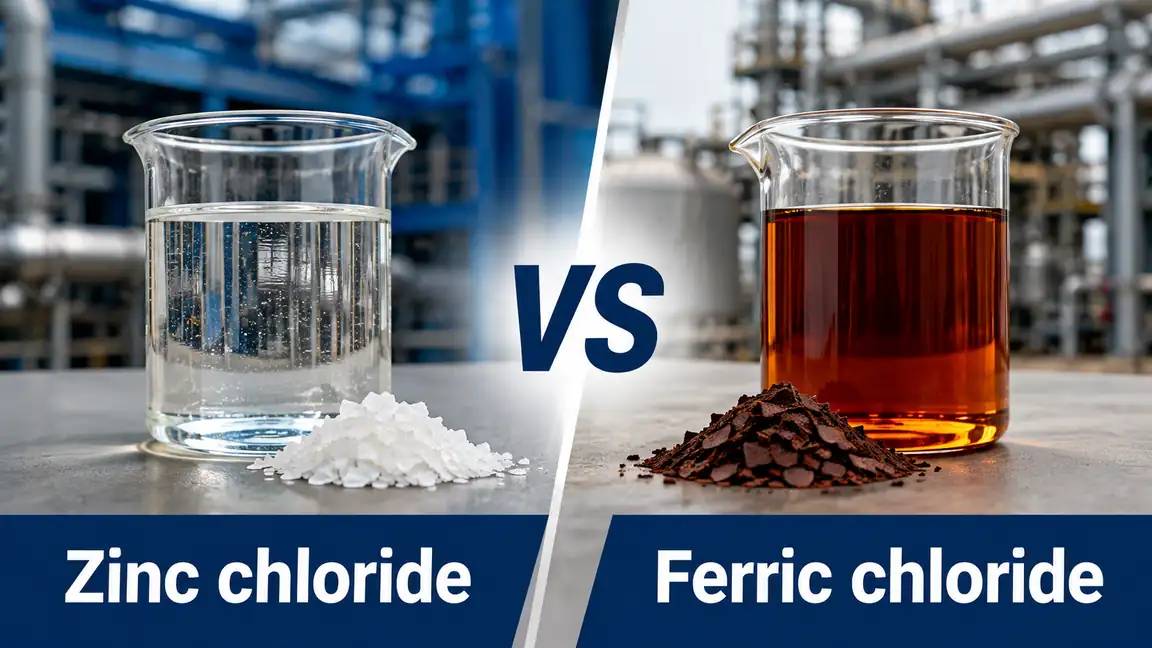
Zinc chloride vs ferric chloride: a visual comparison of two industrial chlorides.
Quick Comparison: Zinc Chloride vs Ferric Chloride
| Factor | Zinc Chloride (ZnCl₂) | Ferric Chloride (FeCl₃) |
| Primary industrial role | Flux, Lewis acid catalyst, electrolyte and process chemical | Coagulant, phosphorus precipitant and sludge-conditioning chemical |
| Water-treatment role | Process-specific; not a standard drop-in replacement for ferric chloride coagulation | Widely used for coagulation in drinking water and wastewater |
| Common supply form | High-purity solid grades such as 95% and 98%; other solution formats may be available | Frequently supplied as concentrated liquid; dry forms also exist |
| Key buying variable | Purity and impurity limits | Delivered concentration, dose requirement and treatment performance |
| Storage concern | Hygroscopic and corrosive; moisture protection matters | Highly corrosive; compatible tanks, pumps and piping are essential |
| Best-fit decision | Choose when ZnCl₂ chemistry is required by the process | Choose when iron-salt coagulation/precipitation is the treatment objective |
What Zinc Chloride Does in Industrial Manufacturing
Industrial applications and process fit
For broader process-specific guidance, see our industrial zinc chloride applications.
Zinc chloride is selected because of its chemical behavior, not because it is another chloride salt. It is used in applications including metal treatment and galvanizing, chemical synthesis and catalysis, battery manufacturing, textile processing and other industrial processes. The broader zinc chloride application overview helps procurement and technical teams match the material to the process before they compare quotations.
Why grade selection matters
For bulk purchasing, grade selection matters. Our current zinc chloride specifications distinguish 95% industrial grade from 98% high-purity material by both assay and impurity limits. The complete zinc chloride specifications.
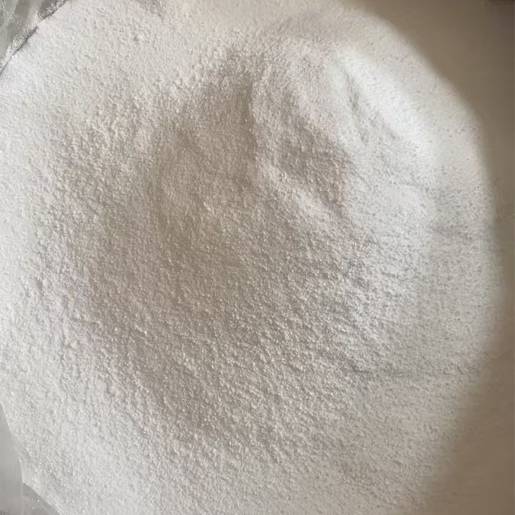
Grade selection should be based on the complete specification, not purity percentage alone.
A 95% grade can be appropriate where the process tolerates its impurity profile. The 98% grade is the safer technical choice when tighter iron, heavy-metal or insoluble limits are important. This is why a buyer should compare the certificate of analysis against the production requirement rather than automatically choosing the highest assay.
95% vs 98% zinc chloride
| Parameter | 95% Industrial Grade | 98% High Purity |
| ZnCl₂ | Min. 95.0% | Min. 98.0% |
| Iron (Fe) | Max. 0.05% | Max. 0.001% |
| Sulfate | Max. 0.05% | Max. 0.01% |
| Water insolubles | Max. 0.1% | Max. 0.05% |
| Heavy metals (as Pb) | Max. 0.05% | Max. 0.002% |
What Ferric Chloride Does in Water and Wastewater Treatment
Role in coagulation and wastewater treatment
Ferric chloride is an established water-treatment chemical. The U.S. EPA identifies ferric chloride as a coagulant used in drinking-water and wastewater treatment and as a sludge-dewatering agent. In wastewater treatment it also reacts with phosphates, which is why it is commonly evaluated for suspended-solids and phosphorus removal. EPA water-treatment chemical profile provides a useful independent reference for this role.
What buyers should compare
That function makes ferric chloride the clearer choice when the plant objective is conventional coagulation. Actual dose should be established through jar testing and plant trials because raw-water chemistry, pH, alkalinity and solids loading affect performance. Buying on price per ton alone can therefore be misleading: the more relevant commercial metric is cost per treated cubic meter at the required effluent quality.

Chemical selection should be validated against the plant’s dosing system, materials of construction and treatment objective.
Where the Two Chemicals Overlap — and Where They Do Not
Where the functions overlap
The overlap is mainly at the level of industrial chemical handling and certain water-related operations, not identical process function. Both require corrosion-aware storage, documented quality control and trained handling. Both may appear in industrial facilities where water treatment, metal processing or chemical production take place.
Why they are not interchangeable
For a plant seeking turbidity reduction, floc formation or phosphate precipitation, ferric chloride is usually the relevant starting point. For a manufacturer that specifically requires ZnCl₂ chemistry—such as galvanizing flux, a Lewis acid catalyst or a zinc-based electrolyte—zinc chloride is the relevant material. A treatment program using zinc species for corrosion inhibition or another specialized purpose should be engineered as that specific program, not described as a ferric chloride substitute.
For buyers evaluating zinc chloride in a water-related process, our water-treatment application guide provides process context, while documented Brazil municipal-water and Australia wastewater supply cases show the type of industrial projects where buyers have sourced 95% or 98% zinc chloride. The documented Brazil municipal-water case is included in our success stories.
Handling, Storage and Bulk Procurement Differences
Storage and handling
Both chemicals are corrosive, so procurement cannot stop at assay and unit price. Ferric chloride systems often require corrosion-resistant tanks, pumps and piping. Zinc chloride is strongly hygroscopic, making moisture protection and packaging integrity especially important for solid material.
Packaging, MOQ and documentation
For our zinc chloride grades, current packaging options include 25 kg bags and 1,000 kg bags, with container-loading options listed on the specifications page. Minimum full order is 25 tons, and bulk buyers can request a batch-specific COA before purchase. Buyers comparing packaging and shipment planning can also use our bulk zinc chloride buying guide.
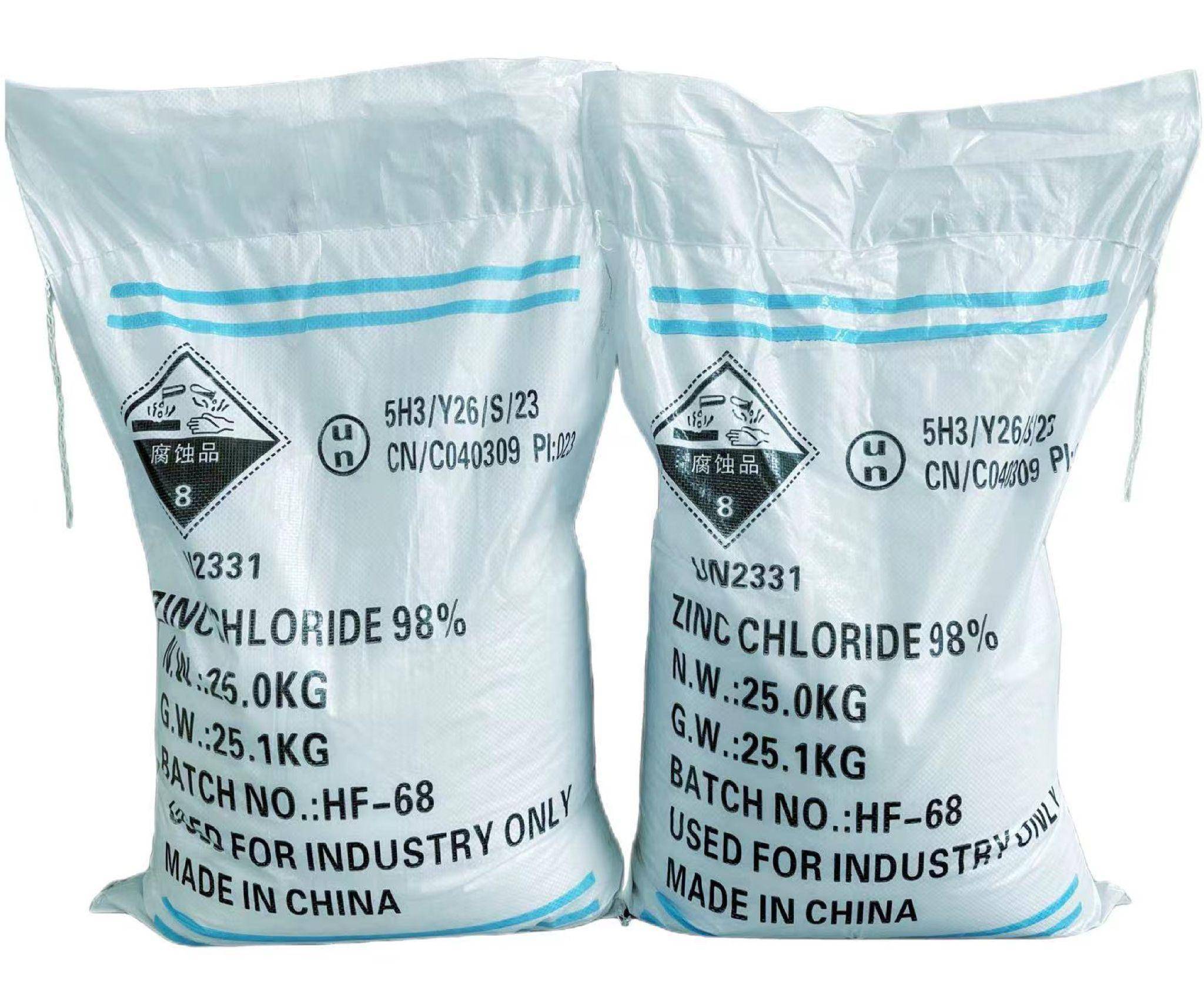
Bulk chemical procurement should verify grade, packaging, batch documentation and shipping configuration together.
First-time importers should also verify the supplier before releasing a bulk order. Common first-time zinc chloride buying mistakes include relying on a price quote without confirming technical specifications, documents and logistics. Supplier certification checks and our bulk zinc chloride buying guide provide a practical verification framework. A related guide explains how to verify a Chinese zinc chloride manufacturer.
Supplier due diligence should also include certification and compliance checks.
WhatsApp Us for Free a Consultation
When Should You Choose Zinc Chloride or Ferric Chloride?
Choose ferric chloride when
Choose ferric chloride when the required job is conventional coagulation, suspended-solids removal, phosphorus precipitation or sludge conditioning and plant testing confirms the dose and performance.
Choose zinc chloride when
Choose zinc chloride when your manufacturing process specifically needs ZnCl₂ chemistry and when the selected grade meets your impurity limits. For many industrial users, the choice is then between 95% and 98% rather than between zinc chloride and ferric chloride.
If zinc chloride is the correct chemistry, the industrial-use guide helps connect grade selection with application and procurement requirements. Our broader zinc chloride industrial-use guide.
Full zinc chloride manufacturing tour video showing the production environment relevant to supplier verification and bulk sourcing.
Frequently Asked Questions
Is zinc chloride a replacement for ferric chloride in water treatment?
Not generally. Ferric chloride is a standard coagulant for drinking-water and wastewater treatment. Zinc chloride has different chemistry and should only be used where a process is specifically designed for a zinc-chloride function.
Which chemical is better for coagulation?
Ferric chloride is the relevant choice for conventional iron-salt coagulation. Final selection and dosage should be validated with jar tests and full-scale operating conditions.
When is 98% zinc chloride preferable to 95%?
Use 98% when tighter impurity limits matter to the process. The current 98% specification has substantially lower limits for iron and heavy metals than the 95% grade.
What should a bulk buyer compare besides price?
Compare technical specification, treatment dose or required grade, packaging, corrosion-compatible handling, batch COA, regulatory documents, lead time and supplier reliability.
Conclusion
The practical zinc chloride vs ferric chloride decision starts with process chemistry. Ferric chloride is the stronger fit for conventional coagulation and related wastewater-treatment duties. Zinc chloride belongs in processes that specifically require ZnCl₂, where purity and impurity control then become the main purchasing variables. For industrial buyers, defining the function first prevents false price comparisons and reduces the risk of buying the wrong chemical for the plant.
WhatsApp Us for Free a Consultation

Supplier verification should include current quality documentation and batch-specific product records.
Industrial Buyers: Next Steps for Sourcing Bulk Zinc Chloride
What makes our Zinc Chloride Better:
✅ Compliant with EU, UN, ISO Standards – No Legal Headaches
✅ Guaranteed Purity – Stability for your Processing Plant
✅ Batch-Specific COA Provided – Full Transparency per Shipment.
Download Our EU-approved FREE COA & Specifications. Specifications Page