



Buying zinc chloride in bulk is not simply a matter of finding the lowest price per ton.
For an industrial manufacturer, the more important questions are whether the material matches your process, whether the impurity limits are suitable, whether the packaging will survive international transportation, and whether the supplier can maintain consistent quality across repeat shipments.
A cheaper zinc chloride shipment can become expensive if it causes production problems, rejected material, additional testing or delays.
That is why industrial buyers should evaluate grade, specifications, packaging, documentation, supplier capability and trial-order performance together before committing to a long-term supply arrangement.
For buyers sourcing zinc chloride from China, this approach is particularly important. The right supplier should be able to provide clear specifications, batch documentation, appropriate packaging and a practical path from sample testing to full-container supply.
What to Check Before Buying Bulk Zinc Chloride
Before requesting a quotation, define the requirements your production team actually needs.
At minimum, confirm these seven points:
- Required zinc chloride grade
- Purity and impurity limits
- Application and process requirements
- Packaging format
- Required documentation
- Monthly and annual consumption
- Supplier’s ability to support repeat orders
Zinc chloride is available in different grades, and the highest purity is not automatically the most economical or technically appropriate choice. The correct grade is the one that satisfies your process requirements without paying for specifications your operation does not need.
For example, CamaZincChloride currently supplies 95% industrial-grade and 98% high-purity zinc chloride, with different impurity limits for each grade.
For buyers still determining which specification fits their process, the detailed zinc chloride specifications provide the starting point for comparing the available grades.
Bulk zinc chloride packaging should be selected according to production volume, handling equipment and shipping requirements.
95% vs 98% Zinc Chloride: Which Grade Should You Buy?
The choice between 95% and 98% zinc chloride should be based on the technical requirements of your application, not simply the percentage printed on the quotation.
CamaZincChloride’s current specification table gives the following limits:
| Parameter | 95% Industrial Grade | 98% High Purity |
| Zinc Chloride (ZnCl₂) | Min. 95.0% | Min. 98.0% |
| Iron (Fe) | Max. 0.05% | Max. 0.001% |
| Sulfate (SO₄²⁻) | Max. 0.05% | Max. 0.01% |
| Water Insolubles | Max. 0.1% | Max. 0.05% |
| Heavy Metals (as Pb) | Max. 0.05% | Max. 0.002% |
These differences matter because a buyer is not purchasing purity alone. You are purchasing a complete chemical specification.
When 95% industrial grade may make sense
The 95% grade can be appropriate where the production process does not require the tighter impurity limits associated with the 98% grade.
CamaZincChloride identifies the 95% grade for applications including metal treatment and galvanizing, chemical synthesis and catalysis, wood preservation, and textile and paper processing.
One real customer example illustrates why buyers should test the specification against their process rather than automatically selecting the highest grade. A South African steel-coating customer reported continued use of the 95% grade after previously using 98%.
When 98% high-purity grade may be justified
The 98% grade has tighter listed limits for iron, sulfate, water insolubles and heavy metals.
This can make it more appropriate for applications where contamination control is particularly important, including certain chemical synthesis, battery and other higher-specification manufacturing processes.
The key question is therefore:
What does your process specification require?
Not:
What is the highest percentage available?
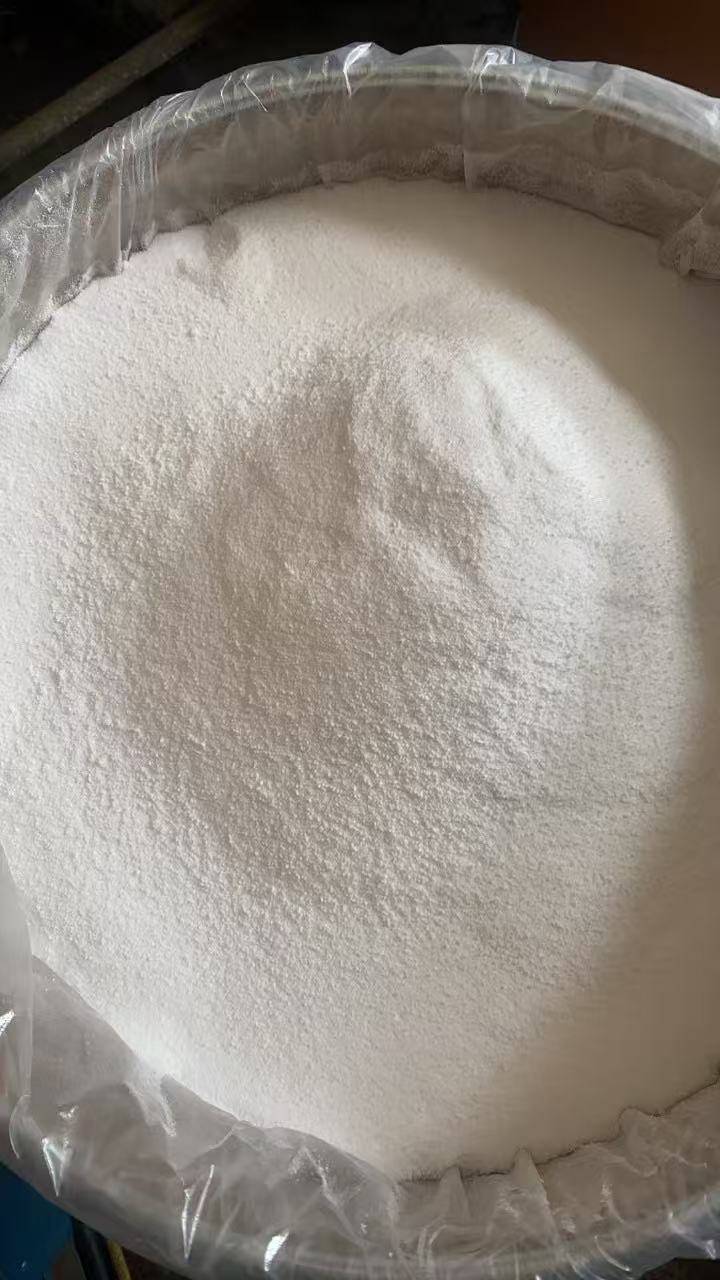
Grade selection should be based on the chemical parameters your production process actually requires.
Technical Note
When comparing quotations, ask suppliers to provide the complete specification rather than comparing the headline purity percentage alone. Iron, sulfate, insolubles and heavy-metal limits can materially affect whether a product is suitable for your process.
Zinc Chloride Packaging: 25kg vs 1000kg Bags
Packaging becomes increasingly important as order volume increases.
A packaging format that works for a small manufacturing facility may be inefficient for a plant consuming several containers per month.
CamaZincChloride currently lists three configurations:
| Packaging | Container | Loading | Pallet |
| 25kg bag | 20ft | 27 tons | No pallet |
| 25kg bag | 20ft | 25 tons | With pallet |
| 1000kg bag | 20ft | 27 tons | Without pallet |
25kg bags
25kg bags can be useful when operators need manageable individual units or when production feeds are handled manually or through smaller-scale material handling systems.
They can also be useful where palletized shipments are preferred.
1000kg bags
For higher-volume operations, 1000kg bags reduce the number of individual packages that need to be handled.
However, they require appropriate lifting and warehouse equipment.
Before selecting this option, confirm that your facility has the equipment and storage arrangements required for safe handling.
What packaging should you choose?
Consider:
- Monthly consumption
- Warehouse capacity
- Forklift availability
- Manual versus mechanical handling
- Pallet requirements
- Container utilization
- Frequency of production replenishment
The existing zinc chloride packaging guide provides a more detailed comparison of 25kg and 1000kg configurations.
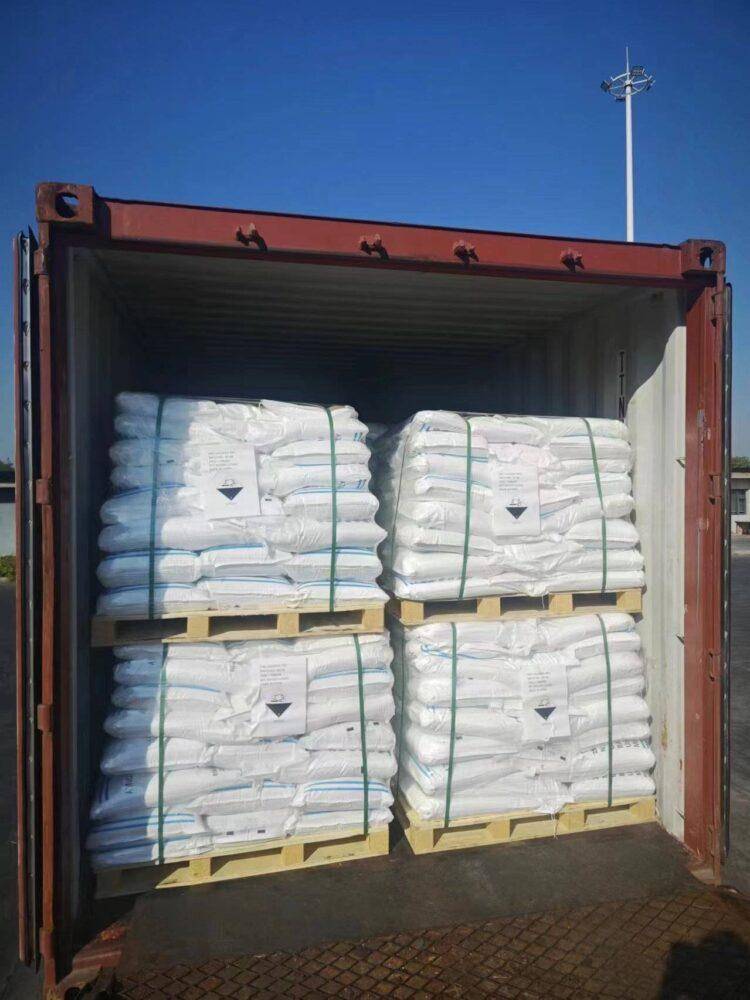
Bulk-bag packaging can reduce individual handling when a manufacturing facility has suitable lifting equipment.
How Much Bulk Zinc Chloride Fits in a 20-Foot Container?
Container loading should be considered when comparing supplier quotations because packaging can affect how much material is shipped in each container.
The current CamaZincChloride configurations allow:
- Up to 27 tons in a 20-foot container using 25kg bags without pallets
- Up to 25 tons using 25kg bags with pallets
- Up to 27 tons using 1000kg bags without pallets
This means a buyer comparing two suppliers should not look only at the quoted price per ton.
You should compare the complete shipment economics, including:
- Product price
- Packaging
- Palletization
- Container utilization
- Freight
- Destination charges
- Documentation
- Lead time
- Potential quality-related losses
A supplier offering a slightly lower product price may not necessarily provide the lower landed cost.
Why First-Time China Importers Often Get Bulk Chemical Buying Wrong
First-time importers often focus on the supplier’s quotation before defining the purchasing specification.
That reverses the process.
A better approach is to establish your requirements first and then ask suppliers to quote against the same specification.
1. Choosing on price alone
The lowest quotation is not necessarily the lowest total cost.
If a batch fails your internal quality checks, you may face additional laboratory testing, production disruption, reprocessing, disposal or replacement costs.
2. Comparing purity without comparing impurities
Two suppliers can both quote 98% zinc chloride while providing different impurity profiles.
Ask for the full specification.
3. Skipping sample testing
A sample gives your technical team an opportunity to compare the material against your process requirements before a full-container purchase.
4. Ignoring batch documentation
A supplier should be able to explain what documentation accompanies the shipment and how the stated specifications are verified.
5. Treating packaging as an afterthought
Packaging affects storage, handling, container loading and product protection during transportation.
6. Moving directly into recurring supply
For a first order, a controlled trial can provide valuable information about product consistency, documentation, packaging and logistics.
Decision-Maker Insight
For a business owner or procurement director, the real objective is not the lowest price on a single shipment. It is predictable production cost over multiple shipments.
A reliable supplier who consistently delivers the agreed specification can reduce the risk of rejected batches, production interruptions and emergency sourcing.
How to Verify a Bulk Zinc Chloride Supplier
Before committing to a supplier, ask for evidence rather than relying only on sales claims.
Request the complete specification
The specification should identify the product grade and relevant impurity limits.
For CamaZincChloride, the published specification identifies CAS No. 7646-85-7 and HS Code 282739, alongside the 95% and 98% grade parameters.
Request a batch-specific COA
A Certificate of Analysis should allow your technical team to verify the actual batch parameters against the agreed specification.
CamaZincChloride states that batch-specific COA documentation can be provided.
Check regulatory and quality documentation
The current product information identifies REACH, ISO and SGS-related quality credentials, as well as UN-certified packaging on the main site.
For European buyers in particular, regulatory documentation should be checked against the destination country’s actual requirements rather than assumed from a generic certification statement.
Ask about manufacturing capability
A supplier handling recurring industrial orders should be able to demonstrate that its production and warehousing capabilities are appropriate for the quantities being requested.
Camachem states that it has more than 15 years of zinc chloride supply experience and welcomes qualified buyers to visit the factory and review production processes.
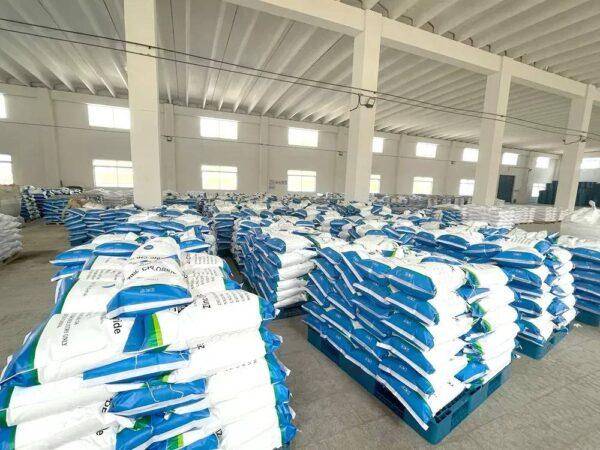
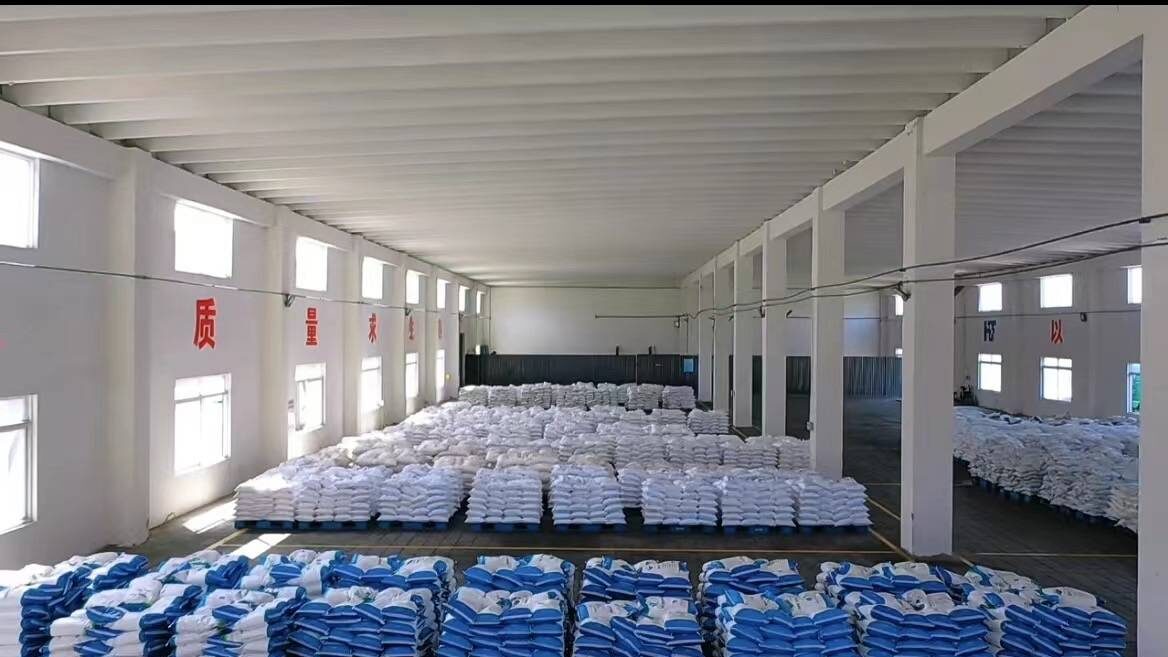
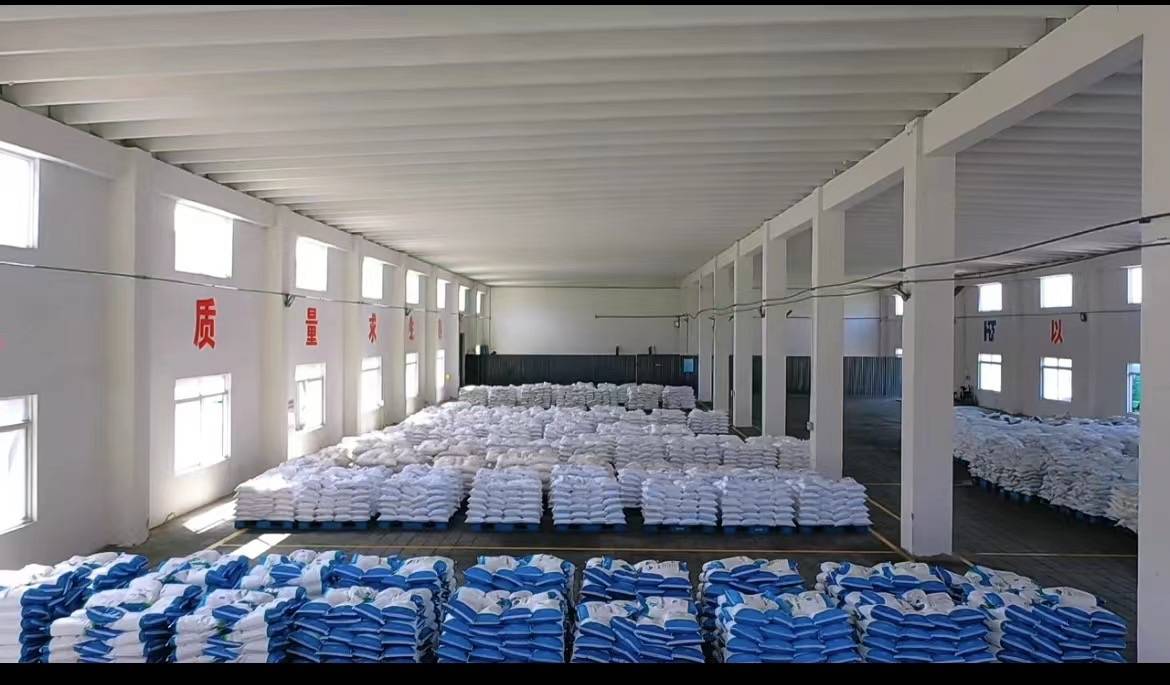
Production and warehousing capability are important considerations when evaluating a long-term bulk chemical supplier.
What Should You Ask Before Placing a Bulk Zinc Chloride Order?
Use this checklist when comparing suppliers:
Product
- What grade is being quoted?
- What is the minimum ZnCl₂ content?
- What are the iron limits?
- What are the sulfate limits?
- What are the water-insoluble limits?
- What are the heavy-metal limits?
Packaging
- Is the product supplied in 25kg or 1000kg bags?
- Are pallets required?
- How much product fits in a 20-foot container?
- Does the packaging protect the product from moisture?
Documentation
- Is a batch-specific COA provided?
- Is an SDS available?
- What regulatory documentation is available?
- Are the certificates current and applicable to the product being purchased?
Commercial
- What is the MOQ?
- What is the lead time?
- What are the payment terms?
- What Incoterm is being quoted?
- What port is used?
- What is the expected shipment schedule?
Supplier
- Is the supplier a manufacturer or trader?
- Can they provide a sample?
- Can they support a trial shipment?
- Can they maintain the same specification for repeat orders?
- Can qualified buyers arrange a factory visit?
From Sample to Bulk Supply: A Lower-Risk Buying Process
A structured procurement process reduces the risk of making a large commitment before the product has been evaluated.
Step 1: Consultation
Start by sharing:
- Your application
- Required grade
- Monthly consumption
- Annual volume
- Required impurity limits
- Destination
- Preferred packaging
This allows the supplier to understand what you actually need rather than simply quoting a generic product.
Step 2: Sample Testing
Your laboratory or technical team should test the sample against your own specification.
CamaZincChloride’s current process includes a 500g sample for laboratory testing against the customer’s technical requirements.
Step 3: Trial Order
Once the sample meets requirements, a full-container trial can be used to evaluate the broader supply process.
The trial is not only about chemical quality.
It can also reveal whether:
- Packaging arrives in good condition
- Documentation is correct
- Logistics perform as expected
- The material matches the tested sample
- Communication works during shipment
Step 4: Ongoing Partnership
If the trial performs successfully, recurring orders can be based on the agreed specification, packaging and commercial terms.
This sample → trial → recurring supply approach is particularly useful for first-time importers who do not yet have an established relationship with a Chinese supplier. CamaZincChloride describes this four-stage process as consultation, sample, trial order and partnership.

Testing a sample before a full-container order gives the technical team an opportunity to verify process compatibility.
Industrial Applications and Grade Selection
Bulk zinc chloride is used across multiple industrial sectors, so the required grade should always be connected to the end application.
Current product information identifies applications including:
- Metal processing and galvanizing
- Battery manufacturing
- Chemical synthesis and catalysis
- Water treatment
- Oil and gas
- Textile and fiber processing
- Rubber and vulcanization
- Paper and pulp manufacturing
The appropriate grade can therefore differ between industries and even between two manufacturers operating in the same sector.
For example, a galvanizing operation may place particular importance on impurity levels that affect its flux system. A chemical synthesis operation may have different requirements for purity and trace contaminants.
For a deeper look at application-specific requirements, explore the zinc chloride applications available for industrial manufacturers.
Buyers involved specifically in hot-dip galvanizing can also use the guide on selecting the right zinc chloride grade for galvanizing when evaluating purity and impurity requirements.
Zinc Chloride Storage and Moisture Protection
Zinc chloride is highly deliquescent, meaning it readily absorbs moisture from the surrounding air.
That makes packaging and storage important after the product arrives at your facility.
Industrial buyers should:
- Keep containers properly closed
- Minimize unnecessary exposure to humid air
- Store the product in an appropriate dry area
- Follow the supplier’s SDS
- Use suitable chemical-handling procedures
- Avoid leaving opened packaging exposed unnecessarily
Packaging decisions should therefore be made with the warehouse environment in mind.
A 1000kg bulk bag may be efficient for one facility but unsuitable for another if the site lacks the equipment needed to move it safely.
Why Supplier Transparency Matters More Than a Low Quote
When buying bulk zinc chloride, the quotation is only one part of the purchasing decision.
A credible supplier should be able to answer questions about:
What are you buying?
The exact grade and specification.
How will it be delivered?
The packaging, container configuration and shipping terms.
How is the quality verified?
COA, testing and relevant certifications.
Can you test it first?
Sample availability and technical support.
Can they supply it again?
Production and warehouse capability.
What happens if you need technical clarification?
A responsive technical and commercial support process.
Camachem states that it has supplied zinc chloride for more than 15 years and supports qualified buyers with factory visits and international technical/commercial assistance.
CamaZincChloride also states a current minimum full order of 25 tons, while its published specifications list FOB Shanghai shipping and a typical 7–21 day lead time. Actual delivery schedules can vary according to destination and logistics conditions.

International bulk purchasing requires coordination between product specifications, packaging, documentation and shipping.
Real-World Proof: Why Grade Selection Should Be Based on Your Process
Supplier claims become more useful when buyers can compare them with actual customer experience.
CamaZincChloride’s published customer feedback includes a South African steel-coating customer using 95% zinc chloride and another customer who moved from 98% to 95% after finding the lower grade suitable for its application.
These examples reinforce an important purchasing principle:
The most expensive grade is not automatically the best grade.
The best grade is the one that consistently meets the requirements of your production process.
You can explore the broader zinc chloride success stories for additional examples of industrial applications and customer experience.
Looking to source Bulk Zinc Chloride from China for Your Industry?
Contact our team today for a quotation, sample, and delivery timeline.
WhatsApp Us for Free a Consultation
Zinc Chloride in Industrial Applications: See it in Action!
Want to see how zinc chloride is used in a real industrial setting? Check out this short video. It demonstrates its crucial role in the metal treatment process.
Frequently Asked Questions About Bulk Zinc Chloride
What is the MOQ for bulk zinc chloride?
CamaZincChloride currently states a minimum full order of 25 tons.
What is the difference between 95% and 98% zinc chloride?
The primary difference is the minimum ZnCl₂ content and the tighter impurity limits associated with the 98% grade. For example, the listed iron limit is 0.05% maximum for 95% grade versus 0.001% maximum for 98% grade.
Which zinc chloride grade should I buy?
Choose the grade based on your process specification and impurity requirements. Do not select a grade solely because it has the highest purity.
What packaging options are available?
Current listed options include 25kg bags and 1000kg bags. The 25kg configuration can be supplied with or without pallets, while the listed 1000kg configuration is without pallets.
How much bulk zinc chloride fits in a 20-foot container?
The current listed configurations allow up to 27 tons for 25kg bags without pallets, 25 tons for 25kg bags with pallets, and 27 tons for 1000kg bags without pallets.
Can I test zinc chloride before ordering in bulk?
Yes. CamaZincChloride describes a sample-testing process in which a 500g sample can be sent for laboratory testing against the buyer’s technical requirements.
What documents should I request from a bulk zinc chloride supplier?
At minimum, ask about the product specification, batch-specific COA and SDS. Depending on your destination and application, you may also need applicable regulatory and certification documentation.
How should bulk zinc chloride be stored?
Because zinc chloride is highly deliquescent, it should be protected from unnecessary moisture exposure and handled according to the supplier’s SDS and appropriate chemical-storage procedures.
How should I compare zinc chloride suppliers?
Compare the complete offer rather than price alone: specification, impurity limits, packaging, container loading, COA, certifications, MOQ, lead time, shipping terms, sample policy and ability to support repeat orders.
Conclusion: Buy Bulk Zinc Chloride Based on Total Supply Reliability
For industrial buyers, sourcing bulk zinc chloride successfully requires more than finding a supplier with an attractive price.
Start with your process requirements.
Then compare:
- 95% vs 98% grade
- Purity and impurity limits
- 25kg vs 1000kg packaging
- Container loading
- COA and SDS documentation
- Applicable certifications
- MOQ and lead time
- Sample-testing arrangements
- Trial-order performance
- Long-term supply capability
A disciplined purchasing process gives both the procurement team and technical team greater confidence before moving into recurring supply.
If you are importing zinc chloride for manufacturing, the strongest supplier relationship is one built around a clearly agreed specification, transparent documentation, tested material and consistent delivery—not simply the lowest initial quotation.
Industrial Buyers: Next Steps for Sourcing Bulk Zinc Chloride
What makes our Zinc Chloride Better:
✅ Compliant with EU, UN, ISO Standards – No Legal Headaches
✅ Guaranteed Purity – Stability for your Processing Plant
✅ Batch-Specific COA Provided – Full Transparency per Shipment.
Download Our EU-approved FREE COA & Specifications.[Specifications Page]